There are two kinds of penlight and they solve different problems. One is built to survive being dropped on a hard floor and publishes a figure for it. The other has a pupil gauge printed on the barrel. Which you should buy depends almost entirely on whether penlights stay put on your unit.
The durability option
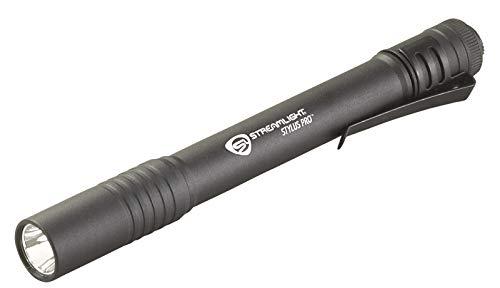
Penlights die by being dropped - out of a pocket, off a counter, onto a floor. The Streamlight Stylus Pro is the one with a published answer: machined from solid aircraft-grade aluminumand drop-test verified above the industry standard of six feet.
It also runs on 2 x AAA, which matters more than it sounds. A proprietary cell is a problem at 3am; AAA batteries are in every vending machine and supply cupboard.
What it does not have is a pupil gauge, which means a reference card or a laminated badge insert instead.
The nurse-specific option
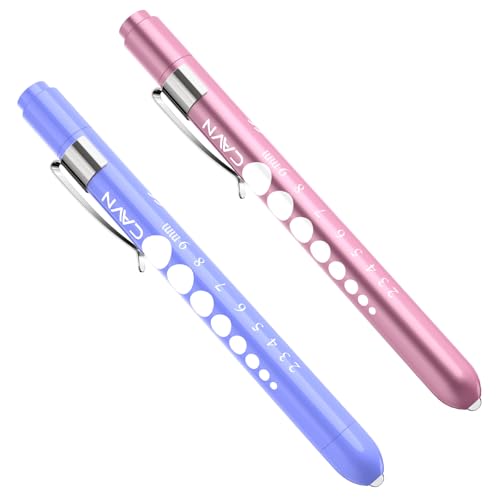
A printed pupil gauge and ruler on the barrel is the whole product, and it is genuinely useful - mid-assessment is the wrong time to be looking for a reference. A ruler also measures a wound without a second tool.
These come in two-packs, which is the right format for a unit where things disappear: losing one is an irritation rather than a cost.
The honest caveats are substantial. Generic sellers, no drop-test figures, no published switch-life data, and the listings rotate - the exact light you liked may not exist next year.
The lumen numbers do not agree
Worth stating plainly because it affects a spec people shop on. For the Streamlight Stylus Pro, one retailer lists 100 lumens and another lists 65 lumens for what appears to be the same model. We could not resolve that against a Streamlight spec sheet.
A separate higher figure - 160 lumens - belongs to a different Streamlight model with a magnetic base, not the classic Stylus Pro, and it gets quoted interchangeably.
For budget nurse penlights, output claims come entirely from seller listings with no independent test we could find. Treat any lumen figure in this category as a rough indication rather than a specification.
What actually matters for clinical use
- Enough output, not maximum output. A pupil check does not need a tactical flashlight, and an over-bright light in a dim room is unpleasant for the patient.
- A switch that works reliably. This is the most common failure point and nobody specifies it. Tail-cap and clicky switches both fail; there is no published data to choose between them.
- A clip that holds. A penlight that falls out of your pocket is a lost penlight.
- Common batteries. AAA over anything proprietary, every time.
- A gauge, if you do neuro checks - or a reference card if your light does not have one.
The honest recommendation
If penlights disappear on your unit: buy the two-pack with the gauge. Spending real money on a light you will lose in a month is worse value, however good it is.
If your gear stays put: buy the Streamlight. It has a published drop test, takes AAA batteries, and is the one that will still be working in three years - and add a pupil reference card separately.
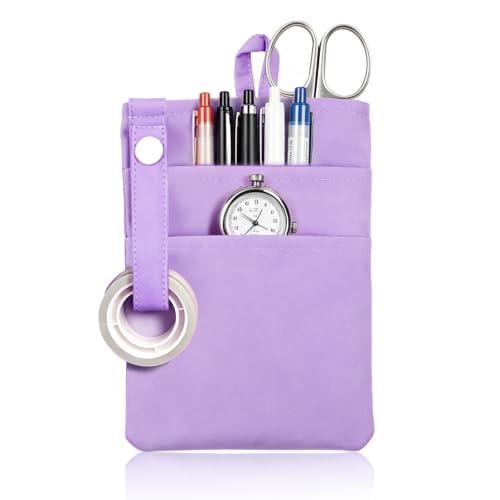
Either way, keep it somewhere you can find it. A pocket layout you do not have to think about is worth more than the light itself.
Overnight the useful property flips from brightness to control: a tight beam you can aim at a dressing without waking the next bed, and batteries you can replace at 3am. Our night shift essentials page covers the rest of that kit.