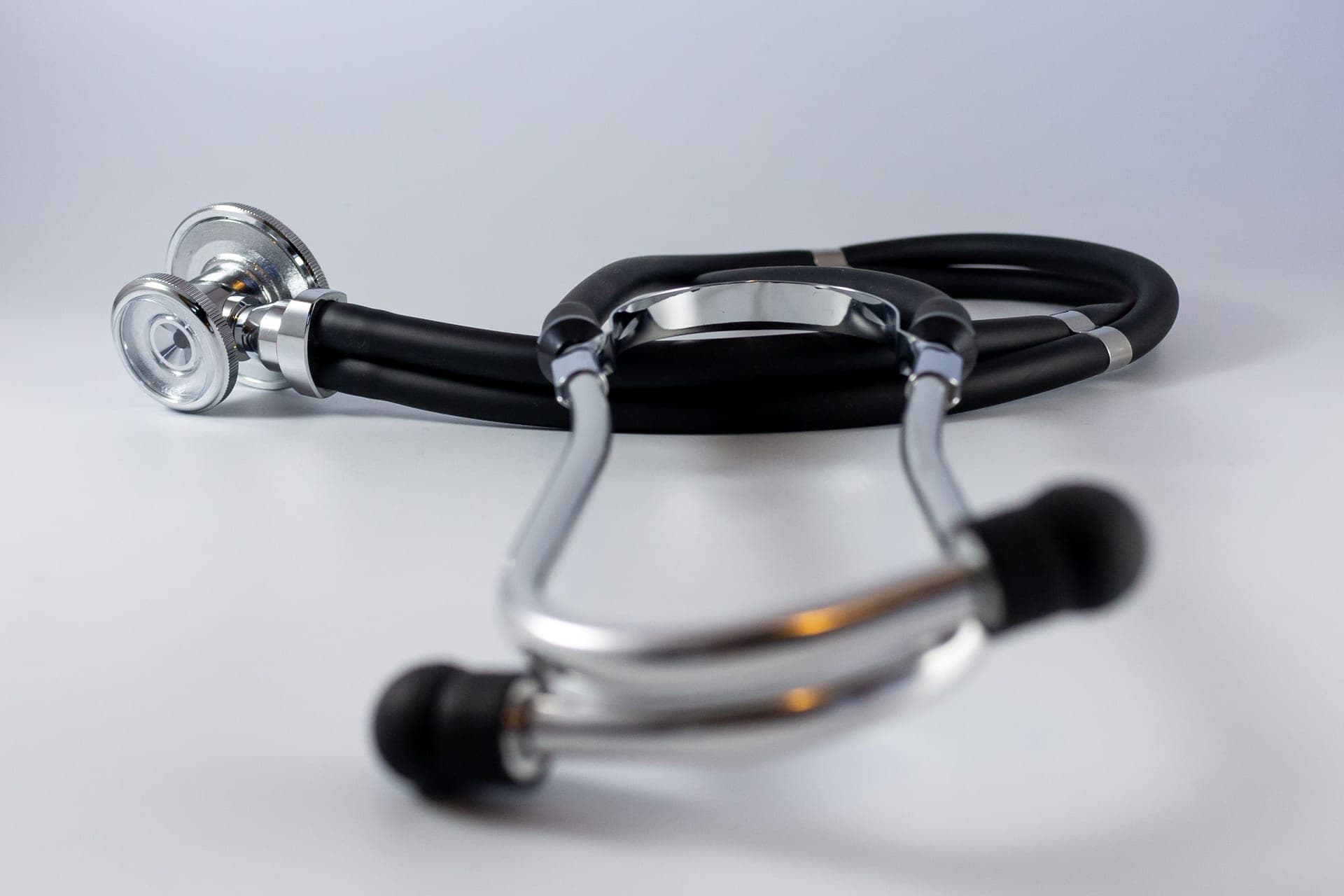
Two true things that pull against each other. Your stethoscope touches multiple patients a shift and needs cleaning between every one of them. And the 70% isopropyl alcohol that does the cleaning gradually stiffens the tubing, hardens the eartips and degrades the diaphragm. Doing it properly means accepting that some parts are consumables.
What to clean, and how often
Between every patient: the diaphragm and rim. This is the surface that touches skin and it is the only part that genuinely needs per-patient attention. Wipe the face, the rim, and the join between diaphragm and chestpiece - that join is where material collects and where a quick swipe across the face misses entirely.
Let it dry. Alcohol needs contact time to do anything. Wiping it off immediately defeats the purpose, and it is the most common mistake.
Daily: eartips, binaural and tubing. These do not touch patients, so per-patient cleaning is unnecessary - but they touch you, they live around your neck, and they collect what the air in a hospital contains. Take the eartips off, wipe them and the metal, and wipe down the tubing.
Never: immersion. Do not submerge any part of a stethoscope. Liquid gets inside the tubing, cannot be dried out, and the instrument is finished.
Why alcohol is also the problem
Tubing stiffens. Repeated alcohol exposure dries out the plasticizers in the tubing. Over a couple of years it loses flexibility, then cracks - almost always at the flex point near the chestpiece, because that is where it bends most.
Eartips harden. The soft material that forms your ear seal goes hard and loses grip, which degrades the seal. This is a major cause of stethoscopes “sounding worse”, and it is almost always misattributed to the chestpiece.
Diaphragms stiffen. Slowly, and you adapt without noticing, which is why people replace instruments that needed a part.
None of this is a reason to clean it less. It is a reason to treat eartips and tubing as consumables and to inspect while you clean - the parts page covers what is replaceable.
What not to use
- Hand sanitizer gel. It leaves a residue, and the residue collects material rather than removing it.
- Bleach or any chlorine product. It attacks tubing and discolors it, and it is unnecessary for this purpose.
- Anything abrasive. Scratching a diaphragm affects what it transmits.
- Ultrasonic cleaners. No.
- Oil or conditioner on the tubing. It does not restore the plasticizers and it leaves a surface that collects material.
The inspection that takes five seconds
While you are wiping it down, check three things. Bend the tubing near the chestpiece - stiff or cracking means it is near the end. Squeeze an eartip - hard rather than soft means replace it. Look at the diaphragm - visible cracks or a stretched look mean it is degrading.
Catching any of those early means replacing a part rather than an instrument.
One honest limit
Nobody here is an infection-control practitioner, and your facility’s policy is the authority on what is required rather than this page. Some units mandate specific products or frequencies, and some have rules about shared equipment that override general advice. What is on this page is the manufacturer-compatible mechanics of cleaning a stethoscope without destroying it.