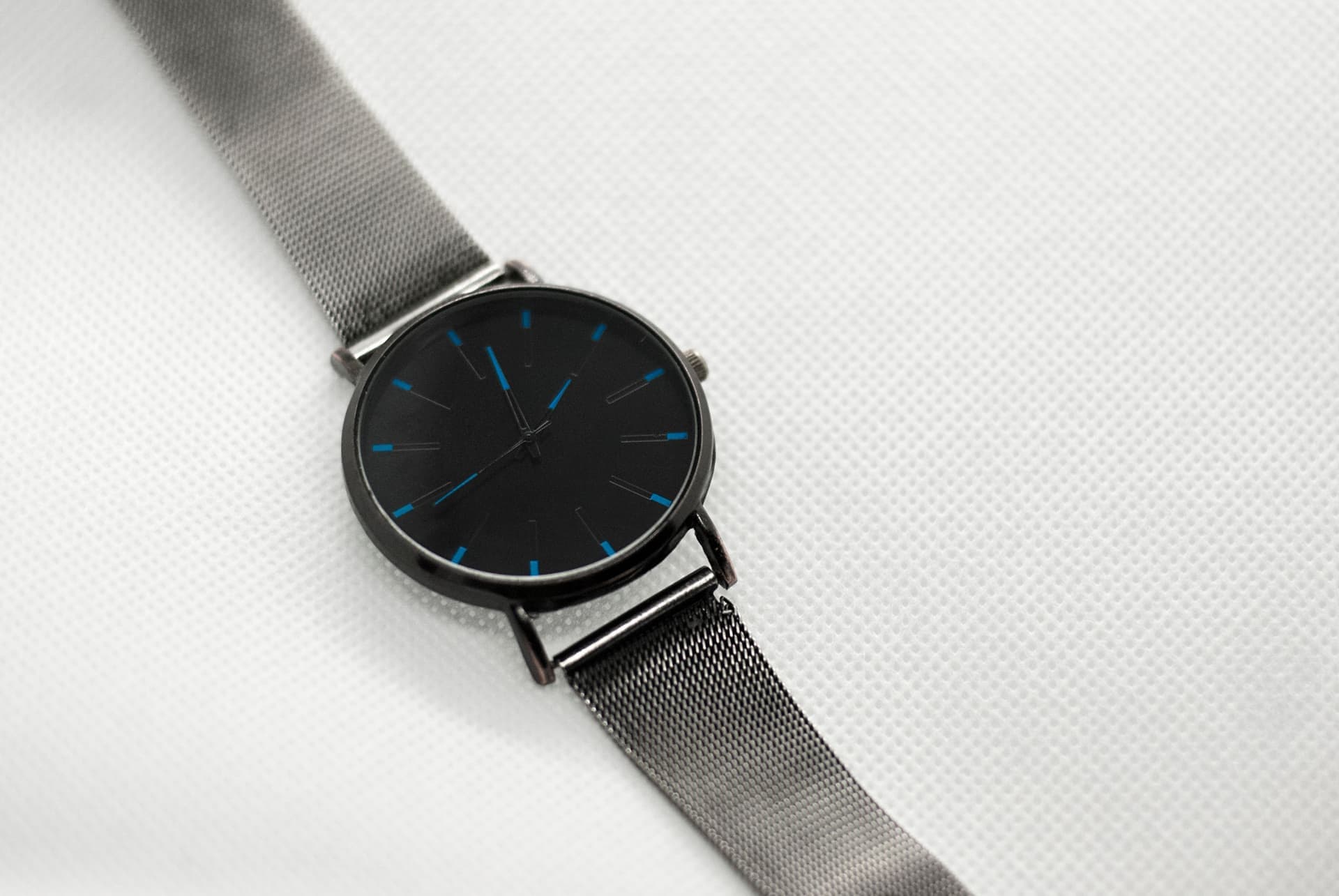
The honest answer: it depends on your facility, and nobody writing on the internet can tell you otherwise. We found no national rule, no professional-body position specific to smartwatches, and no infection-control guideline that names them. What exists is facility policy, and it varies.
So instead of a verdict we cannot support, here is what the research actually found and the three questions that settle it where you work.
What the contamination research found
There is one study that looked at smartwatches directly, and it is worth reading accurately rather than as a headline. Published in Infection and Drug Resistance in 2022 (volume 15, 5289-5299), it swabbed the smartwatches, mobile phones and hands of four healthcare workers at the emergency unit of a tertiary care facility, then ran both culture and shotgun metagenomic sequencing.
What it found:
- On culture, predominantly multidrug-resistant Staphylococcus hominis and Staphylococcus epidermidis.
- On sequencing, high signatures of Pseudomonas aeruginosa and associated antibiotic resistance genes on all devices. Of 201 virulence factor genes, 73% were linked to P. aeruginosa, and 96% of those appeared on both watches and phones.
- About 47% of antibiotic resistance genes (35 of 75) were present on all devices.
- More microbial number and diversity on mobile phones than on smartwatches. Which is the finding most people skip: the phone in your pocket carried more than the watch on your wrist.
The authors call it the first report of smartwatch contamination using metagenomic sequencing and say plainly that further studies are urgently needed. Four participants at one site is not a basis for a policy in either direction, and we are not going to pretend otherwise.
A separate, earlier UK study on conventional wristwatches reported that watch wearers had higher bacterial counts on the wrist but not on the hands - which is the distinction that bare-below-the-elbows policies turn on, and a reminder that wrist colonization and hand contamination are not the same claim.
Why the policy exists even without smartwatch-specific evidence
Many facilities run a bare below the elbows rule for direct patient care, which restricts or prohibits wrist-worn items generally. A smartwatch is caught by that rule as a wrist-worn item, not because anyone studied smartwatches specifically. The rule predates them.
The second concern is the device being a device: a smartwatch can display message content, and anything that can show or store patient information brings its own policy questions about what is permitted on a personal device. That is a records-and-privacy question rather than an infection one, and it is usually answered by a different policy document than the uniform one.
The three questions that actually settle it
Asking “can I wear a smartwatch” produces a shrug. These three produce answers:
- Does our uniform or dress-code policy permit wrist-worn items during direct patient care? This is the bare-below-the-elbows question, and it is the one that most often rules out a watch of any kind.
- Does our personal-device policy permit a wearable that can display messages? Ask whoever owns information governance rather than your charge nurse.
- If both say yes, how is it to be cleaned, and how often? A silicone or plastic strap you can wipe is a different proposition from a fabric or leather one, which cannot meaningfully be cleaned at all.
Get those three answers in writing and the question is closed. Without them, every blog post on this topic - including the ones that sound confident - is guessing about your unit.
If the answer is no
The job a watch does on a shift is narrow: show a second hand so you can count respirations, and be readable in a dark room. An analog watch does both, costs little, and does not trigger either policy question beyond the wrist-worn one.
If your unit bans wrist-worn items entirely, the only remaining answer is a fob watch pinned to the tunic - which we have not researched for this hub, so we are not going to recommend a specific one. Note that no amount of water resistance or cleanability changes a bare-below-the-elbows policy; the point of the rule is that nothing is on the wrist at all.
The watch roundup goes through the analog options in more detail, including the night-shift illumination trade-off.