Skip to content
Shift & Sole

Buying guide · Shoes & Clogs

Best nursing shoes for bunions

With a bunion, one measurement matters more than every other spec combined: how much room there is where the joint sits.

By Selena H.
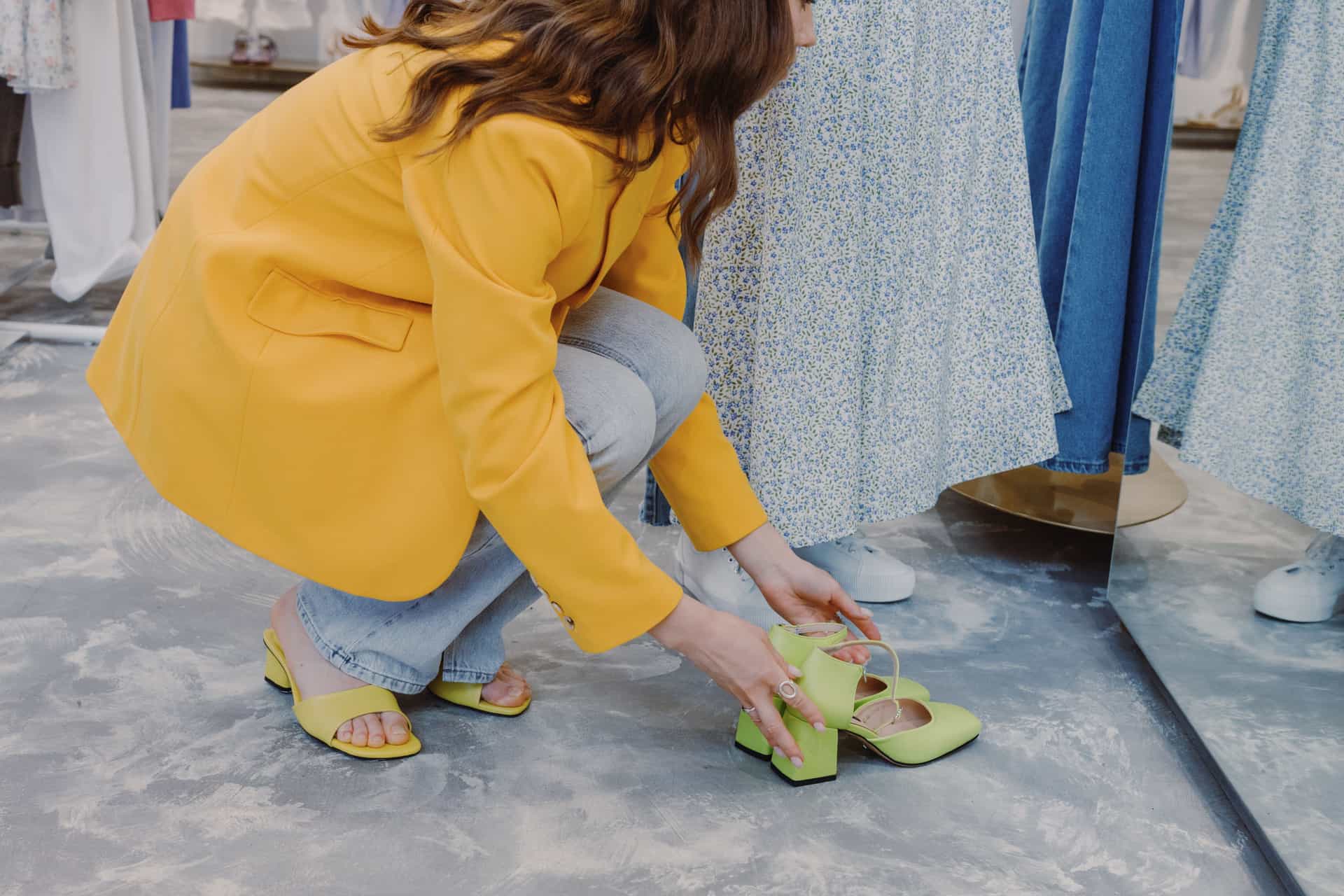
Trying shoes on in a shop

The shortlist

Quick picks

Tap any row to jump to that pick’s full write-up. The price column goes straight to Amazon.

Ranked comparison of our picks, with what each one is best for and our overall score
#ProductBest forScorePrice
1
An enclosed-toe foam work clog in black

Crocs On The Clock Work Slip-On

No stitching or overlay across the joint - the shape accommodates instead of constraining.

A molded shell with no seams to press8.4/ 10
2
A cushioned running shoe with a knit upper

New Balance Fresh Foam X 1080v14

Real wide and extra-wide lasts, so the forefoot itself is wider rather than stretched.

A wide forefoot in a lace-up8.2/ 10
3
A black leather professional clog with a rocker sole

Dansko Professional Clog

The forefoot is a molded box rather than a stitched upper under tension.

A rigid clog with a molded forefoot box7.9/ 10
4
A thick-soled cushioned running shoe in a neutral colorway

HOKA Bondi 9

X-Wide plus maximum stack, with one caveat about the forefoot shape.

Bunion plus a need for cushioning7.7/ 10
5
A washable professional clog with a cork footbed

Birkenstock Super-Birki

Cork-latex takes your foot's shape, including the part that sticks out.

A footbed that shapes around the joint7.8/ 10

Scores are our own editorial assessment of how well each product suits the job on this page. They are not a product rating from reviews and not the result of testing - we have not worn or used these. We print no prices: every button goes to the current one on Amazon, last checked October 13, 2026. #ad

With a bunion, one thing matters more than every other specification combined: whether there is room where the joint sits. A shoe with perfect arch support and a seam pressing on your first metatarsal joint is a shoe you will stop wearing within a week.

What a bunion changes about shoe fitting

A bunion is a bony prominence at the base of the big toe, where the joint has drifted outward. The practical consequence for footwear is that your foot is now asymmetric and wider at a specific point, and that point is covered by the part of the upper that flexes most. Every step pushes the shoe material against it.

So the useful questions are narrow: how wide is the forefoot specifically, and is there a seam, stitched overlay or stiff panel over the joint? Those two determine comfort far more than the midsole, the drop or the arch.

Why molded shells can beat premium shoes

The surprising result on this page is a cheap work clog at the top. The reason is structural: a molded one-piece shell has no stitching and no overlay, so there is nothing under tension to press on the bump. The shape accommodates the foot rather than being pulled around it.

A premium running shoe, by contrast, gets its support from overlays and a structured upper - and those are exactly the features that concentrate pressure on a bunion. This is a case where the mechanism matters more than the price.

Toe box versus width

These get conflated and they are different. A wide shoe is wider throughout, built on a wider last. A roomy toe box is specifically about space for the toes to splay. With a bunion you need both, but you need the second one more - and some shoes have a generous toe box on an otherwise narrow last, which is exactly the right compromise here.

What does not work is going up a length. A longer shoe puts the widest part of the footbed behind your bunion, so the squeeze is unchanged while your heel starts slipping.

The things that help beyond the shoe

Re-lacing. If the pressure is from a lace crossing near the joint, skipping that eyelet pair redistributes the tension. Free, immediate, and it fixes a surprising number of cases.

Bunion sleeves and toe spacers. These are cheap and some people find them genuinely helpful through a shift. They also take up room inside the shoe, so factor that into sizing rather than adding them to a shoe that already fits exactly.

Arch support, indirectly. A bunion often travels with a collapsing arch, and the collapse loads the joint further. Supporting the arch does not undo the bunion but it can reduce how much the joint is being pushed.

Seeing someone about it. Nobody here is a clinician. Bunions progress at different rates and there are interventions well beyond footwear. If yours is getting worse or the pain is changing, that is an appointment rather than a purchase.

The picks in full

Every pick, in order

01

A molded shell with no seams to press

Crocs On The Clock Work Slip-On

No stitching or overlay across the joint - the shape accommodates instead of constraining.

An enclosed-toe foam work clog in black

Enclosed-toe work clog

Material
Croslite, waterproof and washable
Outsole
Crocs Lock slip-resistant tread
Certifications
ASTM F2913 and EN ISO 20347:2012 OB cited on listings (test version varies)
Toe
Fully enclosed

Specs: Crocs - On The Clock Work Slip-On product page

For a bunion, the thing that hurts is usually a seam or an overlay pulling tight across the joint. A molded Croslite shell has neither: it is one piece, it flexes, and there is nothing under tension sitting on the bump. That makes a cheap work clog genuinely the most comfortable option here for some people, which is not what anyone expects.

Forefoot room9.4
Pressure-free upper9.6
Slip resistance8.8
Cleanability9.6
Arch support4.2
Overall8.4 / 10

What it gets right

  • Enclosed toe plus a slip-resistant outsole: the two things a classic Croc clog does not give you
  • Waterproof Croslite means a spill is a wipe, not a write-off
  • Cheapest route to a hospital-compliant shoe by a wide margin
  • Weighs almost nothing, which your hips notice on a long shift

What it gets wrong

  • Minimal arch support - this is a foam shell, not a supportive shoe
  • Listings cite different ASTM test versions (F2913-24 vs F2913-11), so confirm what your employer requires
  • Foam compresses and the shoe has a shorter useful life than leather
  • Sizing reports conflict: most reviewers say size down, some say true to size

Who should skip itYou have plantar fasciitis or fallen arches. A flat foam bed with no structure is the specific thing that makes those conditions worse over twelve hours.

Check price on Amazon

#ad How we earn - we never print a price we cannot verify

02

A wide forefoot in a lace-up

New Balance Fresh Foam X 1080v14

Real wide and extra-wide lasts, so the forefoot itself is wider rather than stretched.

A cushioned running shoe with a knit upper

Cushioned neutral sneaker, multiple widths

Stack
38 mm heel / 32 mm forefoot
Drop
6 mm
Weight
About 9.9 oz
Widths
Standard D and 2E confirmed at retail
Generation
v15 has shipped, so v14 is often discounted

Specs: Run and Become - New Balance 1080v14 D Wide listing

The sensible lace-up answer: buy a genuinely wider last rather than a longer shoe. Width here means the whole footbed is wider, so the widest part of the shoe lines up with the widest part of your foot instead of squeezing it. One honest note from owner reports - several reviewers find the standard D tight specifically at the big toe, which is exactly the wrong place for a bunion, so go wide.

Forefoot room9.0
Width options9.6
Cushioning8.6
Pressure-free upper7.4
Slip resistance3.0
Overall8.2 / 10

What it gets right

  • New Balance's width range is the deepest in the mainstream - this is the brand to start with if your foot is not a standard D
  • 6 mm drop sits between the HOKA and Brooks options, which suits people who are unsure what drop they want
  • Because the v15 has shipped, the v14 is frequently the best value in this whole category

What it gets wrong

  • Reported weights vary widely between retailers (237 g to 302 g depending on width and listing) - do not trust a single figure
  • Several reviewers find the standard D tight at the big toe, so size up a width rather than a length
  • Previous-generation stock means your size and color may simply be gone
  • Not slip-resistant rated

Who should skip itYou need to be able to re-buy the identical shoe in six months. Buying a superseded generation means next time you are starting the fit process over.

Check price on Amazon

#ad How we earn - we never print a price we cannot verify

03

A rigid clog with a molded forefoot box

Dansko Professional Clog

The forefoot is a molded box rather than a stitched upper under tension.

A black leather professional clog with a rocker sole

Leather nursing clog

Heel height
2 in, on a 0.8 in platform
Outsole
PU rocker bottom
Footbed
Single-density open-cell PU foam
APMA
Accepted
Slip resistance
Not stated on the product page

Specs: Dansko - Professional Black Box product page

Clogs are better for bunions than their reputation suggests, for a structural reason: the forefoot is a rigid molded box, so nothing is being pulled tight across the joint as you flex. It also delivers real arch support, which matters because a bunion often travels with a collapsing arch. It is heavy and the standard Professional has no stated slip resistance.

Forefoot room8.6
Pressure-free upper8.4
Arch support9.0
Cleanability9.0
Weight4.4
Overall7.9 / 10

What it gets right

  • The rocker outsole does some of the work of walking for you, which is what makes it survivable over twelve hours
  • A genuinely rigid shank: the shoe does not fold, so your arch is not holding the shoe up
  • APMA Accepted, and the one clog hospital colleagues have usually already tried
  • Leather upper wipes clean rather than absorbing whatever it is

What it gets wrong

  • Heavy, and you feel it on the stairs
  • Open-back design means no heel retention - it stays on by pressure, not by being fastened
  • Break-in is real and the first two shifts are unpleasant
  • Dansko does not state slip resistance for the standard Professional on its own product page

Who should skip itYou run or sprint on your unit. An open-back clog with no heel retention is the wrong shoe for anything faster than a brisk walk, and ER and code-team nurses consistently say so.

Check price on Amazon

#ad How we earn - we never print a price we cannot verify

04

Bunion plus a need for cushioning

HOKA Bondi 9

X-Wide plus maximum stack, with one caveat about the forefoot shape.

A thick-soled cushioned running shoe in a neutral colorway

Maximum-cushion neutral sneaker

Stack (listed)
43 mm heel / 38 mm forefoot
Stack (lab measured)
41.3 mm / 32.2 mm (RunRepeat)
Drop
5 mm listed; 9.1 mm measured by RunRepeat
Weight
About 10.5 oz, men's
Widths
Standard, Wide, X-Wide

Specs: RunRepeat - HOKA Bondi 9 lab review

The pick if your bunion comes with the general foot fatigue of a long shift on concrete, because nothing else here cushions like it. The caveat is real and worth knowing before you order: reviewers consistently describe the forefoot as tapered and lower in volume than the overall size suggests, so the X-Wide is not optional for a bunion - it is the only version worth trying.

Cushioning9.6
Width options9.2
Forefoot room7.4
Pressure-free upper7.0
Slip resistance3.0
Overall7.7 / 10

What it gets right

  • The most cushioning in the mainstream lineup, which is the single best answer to concrete floors
  • Genuinely available in Wide and X-Wide, not just a roomier standard
  • The rocker geometry keeps you moving forward when your legs have stopped wanting to
  • Easy to find in person at any running shop, so you can try the size before you buy

What it gets wrong

  • HOKA's listed 5 mm drop and RunRepeat's measured 9.1 mm do not agree - if drop matters to your knees, that is a real discrepancy
  • Mesh upper absorbs anything spilled on it and takes a day to dry
  • Tall stack means less ground feel, which some people find unstable at first
  • Not slip-resistant rated: this is a running shoe doing a work-shoe job

Who should skip itYour unit requires a slip-resistant rated shoe, or you get fluid on your feet regularly. A knit running upper is the wrong material for either.

Check price on Amazon

#ad How we earn - we never print a price we cannot verify

05

A footbed that shapes around the joint

Birkenstock Super-Birki

Cork-latex takes your foot's shape, including the part that sticks out.

A washable professional clog with a cork footbed

Washable professional clog

Upper
Fluid-resistant polyurethane
Footbed
Removable cork-latex
Washing
Birkenstock states 60 C / 140 F for the clog; one retailer gives 86 F for the footbed
Slip resistance
EN ISO 20347:2022 OB SR and ASTM F3445-21 SR cited by medical suppliers

Specs: Birkenstock - Super-Birki model page

The cork-latex footbed gradually takes the shape of the foot standing on it, which for an asymmetric foot is a real advantage - the support ends up specific to your shape rather than to an average one. The first week is genuinely hard going, and for a sore joint that break-in period is worse than usual, which is why it is not higher on this page.

Forefoot room8.4
Pressure-free upper8.8
Arch support9.2
Cleanability9.6
Comfort out of the box3.4
Overall7.8 / 10

What it gets right

  • The only clog here you can genuinely disinfect at temperature - Birkenstock publishes a wash figure
  • Removable cork-latex footbed, replaceable separately when it packs out instead of replacing the shoe
  • The cork footbed molds to your foot over a few weeks, which is a different mechanism from foam compressing
  • Slip resistance is certified to a named standard, not implied

What it gets wrong

  • Listings disagree on the outsole material (PU in some, EVA in others), so confirm the article number before you buy
  • Cork-latex needs a break-in period and feels unforgivingly hard for the first week
  • Open back, so the heel-retention problem applies
  • Looks utilitarian in a way that bothers some people

Who should skip itYou want comfort out of the box. A cork footbed is a two-to-three-week project before it fits you, and plenty of people give up in week one.

Check price on Amazon

#ad How we earn - we never print a price we cannot verify

FAQ

Questions people actually ask

What kind of shoe is best for bunions?

One with a wide forefoot and no seam, overlay or stiff panel over the joint. A molded one-piece shell often beats a more expensive structured shoe for exactly this reason: there is nothing under tension sitting on the bump.

Should I buy a bigger size for a bunion?

No - buy a wider one. A longer shoe puts the widest part of the footbed behind your bunion, so the pressure is unchanged while your heel starts slipping and your toes slide forward.

Can the right shoes fix a bunion?

No. Footwear can stop a bunion being aggravated, which is a large practical difference over a twelve-hour shift, but the deformity is structural. A bunion that is progressing or changing in pain is a clinical question, not a shopping one.

Are clogs bad for bunions?

Better than expected. The forefoot of a leather clog is a rigid molded box, so nothing is pulled tight across the joint as the shoe flexes. The trade-offs are weight and heel retention rather than forefoot pressure.

Do bunion sleeves work inside work shoes?

Some people find them genuinely helpful across a shift. They also occupy space, so size the shoe with the sleeve in rather than adding one to a shoe that already fits exactly.

How this page was put together

We start from the problem the gear has to solve over twelve hours, shortlist products that are currently sold, compare the manufacturers’ published specifications against what that problem actually needs, and read owner feedback at volume to find the failure modes worth reporting. We have not worn, used or physically tested any of this. Where a figure comes from a manufacturer we name them; where published figures disagree with each other we say so rather than picking the flattering one; where nobody publishes a figure we say that too. We print no prices, because a stale number is worse than none. Read the full method.