Skip to content
Shift & Sole

Buying guide · Shoes & Clogs

Best nursing shoes for high arches

A high arch is a rigid, poor shock absorber. It needs cushioning and room over the instep, and it needs stability features left alone.

By Selena H.
Feet resting after a long shift

The shortlist

Quick picks

Tap any row to jump to that pick’s full write-up. The price column goes straight to Amazon.

Ranked comparison of our picks, with what each one is best for and our overall score
#ProductBest forScorePrice
1
A thick-soled cushioned running shoe in a neutral colorway

HOKA Bondi 9

Maximum cushioning, which is the whole answer for a foot that absorbs shock badly.

A rigid arch that transmits every impact8.7/ 10
2
A high-stack cushioned running shoe with a flared sole

ASICS Gel-Nimbus 27

A taller stack than the Kayano with guidance from geometry rather than correction.

High arches that want light structure8.2/ 10
3
A cushioned running shoe with a knit upper

New Balance Fresh Foam X 1080v14

The width range, because a high arch is often a high-volume foot.

A high instep that needs volume8.3/ 10
4
A neutral daily running shoe with a mesh upper

Brooks Ghost 17

A neutral shoe with the highest drop here, for the calf tightness that often comes with it.

High arches with calf tightness8.0/ 10
5
A thick-soled recovery foam clog

OOFOS OOcloog

The softest surface here, and a useful second pair rather than a shift shoe.

The pair you change into7.4/ 10

Scores are our own editorial assessment of how well each product suits the job on this page. They are not a product rating from reviews and not the result of testing - we have not worn or used these. We print no prices: every button goes to the current one on Amazon, last checked October 13, 2026. #ad

A high arch is the opposite problem from a flat foot, and almost all the advice in this category is written for flat feet. What a high arch needs is cushioning and room over the instep. What it does not need is a stability shoe, arch support added underneath it, or a corrective insole - those are built for a foot that collapses, and yours does not.

Why a high arch is harder on you than it looks

A healthy arch flattens slightly under load and springs back, and that movement is how your foot absorbs shock. A high, rigid arch does much less of it. The load that a flexible foot would dissipate has to go somewhere, and it goes up the leg - which is why people with high arches often report aching knees, shins and hips rather than sore feet.

A high arch also concentrates pressure. With less of the midfoot in contact with the ground, your weight rests on a smaller area at the heel and the ball of the foot. That is why those two spots are where the pain shows up, and why maximum cushioning is a genuinely good answer rather than a lazy one.

The instep problem nobody mentions

The complaint we see most from people with high arches is not pain underneath the foot at all. It is pressure across the top of it: the shoe feels like it is clamping, the laces dig in, and the midfoot aches in a band rather than a point.

That is a volume problem, not an arch problem. A high arch means a high instep, and a shoe built for an average instep has to be pulled tight across yours to close. Two things help: a wider build, which adds volume through the midfoot as well as width, and lacing that skips the eyelet row sitting directly over the sore spot. The second is free and genuinely effective.

Why stability shoes are the wrong purchase

Stability features exist to resist inward roll. A high arch typically does the opposite - it tends to roll outward, or supinate - so a stability shoe is pushing in the direction your foot is already going. At best you are carrying weight and stiffness for no benefit; at worst you are being nudged further onto the outside edge of your foot.

The same logic applies to insoles. A tall arch support under an already-tall arch is a pressure point. If you want an insole, what you want is cushioning and a deep heel cup, not arch height - which is the opposite of what the plantar fasciitis page recommends, for a good reason.

What to check before buying

  • Is it actually neutral? “Support” in marketing copy often means pronation control. You want cushioning without correction.
  • Is there a wider build? Not for width’s sake, for instep volume.
  • How does it lace? A shoe you can re-lace to skip a row is a shoe you can adapt.
  • Where is the pressure after an hour? Top of the foot means volume; heel and ball mean you need more cushioning.

And the usual caveat for a page like this: nobody here is a clinician, and persistent foot pain with a high rigid arch is worth having looked at rather than shopped at.

The picks in full

Every pick, in order

01

A rigid arch that transmits every impact

HOKA Bondi 9

Maximum cushioning, which is the whole answer for a foot that absorbs shock badly.
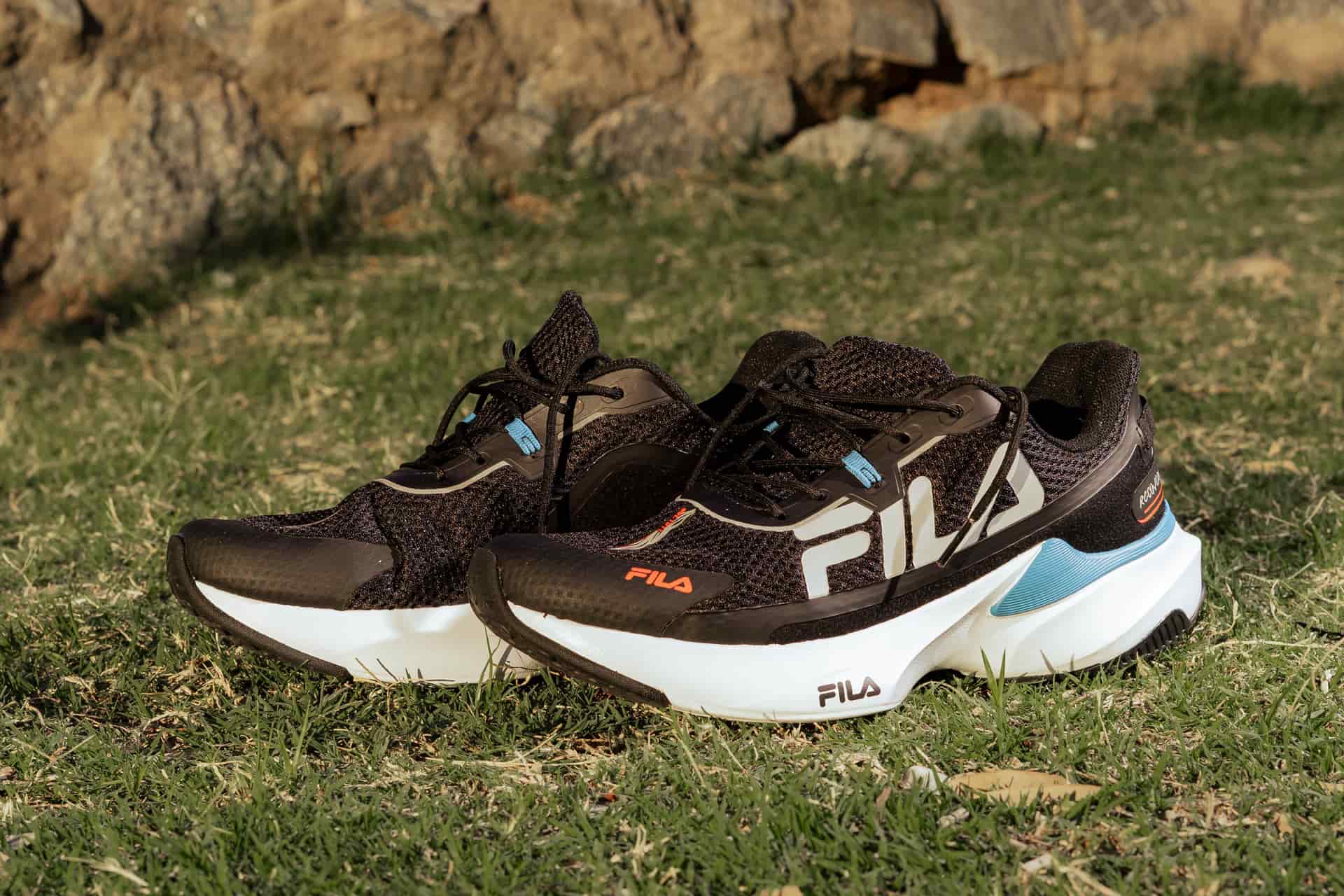
A thick-soled cushioned running shoe in a neutral colorway

Maximum-cushion neutral sneaker

Stack (listed)
43 mm heel / 38 mm forefoot
Stack (lab measured)
41.3 mm / 32.2 mm (RunRepeat)
Drop
5 mm listed; 9.1 mm measured by RunRepeat
Weight
About 10.5 oz, men's
Widths
Standard, Wide, X-Wide

Specs: RunRepeat - HOKA Bondi 9 lab review

A high, rigid arch is a poor shock absorber: load that a flexible foot would dissipate gets transmitted up the leg instead. The fix is material between you and the floor, and 43 mm of listed heel stack is the most of it available. It is also properly neutral, with no correction fighting an arch that does not need any - and the Wide and X-Wide builds give a high instep somewhere to go.

Cushioning9.6
Instep room8.4
Neutral (no correction)9.2
Width options9.2
Slip resistance3.0
Overall8.7 / 10

What it gets right

  • The most cushioning in the mainstream lineup, which is the single best answer to concrete floors
  • Genuinely available in Wide and X-Wide, not just a roomier standard
  • The rocker geometry keeps you moving forward when your legs have stopped wanting to
  • Easy to find in person at any running shop, so you can try the size before you buy

What it gets wrong

  • HOKA's listed 5 mm drop and RunRepeat's measured 9.1 mm do not agree - if drop matters to your knees, that is a real discrepancy
  • Mesh upper absorbs anything spilled on it and takes a day to dry
  • Tall stack means less ground feel, which some people find unstable at first
  • Not slip-resistant rated: this is a running shoe doing a work-shoe job

Who should skip itYour unit requires a slip-resistant rated shoe, or you get fluid on your feet regularly. A knit running upper is the wrong material for either.

Check price on Amazon

#ad How we earn - we never print a price we cannot verify

02

High arches that want light structure

ASICS Gel-Nimbus 27

A taller stack than the Kayano with guidance from geometry rather than correction.

A high-stack cushioned running shoe with a flared sole

Cushioned stable-neutral sneaker

Stack
43.5 mm heel / 35.5 mm forefoot
Drop
8 mm
Classification
Stable neutral - heel sidewalls, broad base, forefoot flare
Weight
About 10.7-10.8 oz

Specs: Flawless Shoe Reviews - Gel-Nimbus 27 vs Gel-Kayano 32

High arches often come with a tendency to roll outward rather than inward, and a shoe with a broad base and heel sidewalls steadies that without correcting it. At 43.5 mm of heel stack this is the taller of the two ASICS options, which is the right one here - the Kayano's stability features are built for the opposite foot.

Cushioning9.0
Neutral (no correction)8.4
Stability8.2
Instep room7.6
Slip resistance3.0
Overall8.2 / 10

What it gets right

  • Taller stack than the Kayano at both ends, so it is the softer, more cushioned of the two ASICS options
  • Light structure from the geometry rather than a corrective post - a middle ground between neutral and stability
  • Same 8 mm drop as the Kayano, which makes switching between the two straightforward

What it gets wrong

  • Not enough correction for genuine overpronation - that is the Kayano's job
  • Heavy for a neutral shoe
  • Not slip-resistant rated

Who should skip itYour arches collapse inward noticeably. The Nimbus offers light guidance, not correction, and you will end up buying the Kayano anyway.

Check price on Amazon

#ad How we earn - we never print a price we cannot verify

03

A high instep that needs volume

New Balance Fresh Foam X 1080v14

The width range, because a high arch is often a high-volume foot.

A cushioned running shoe with a knit upper

Cushioned neutral sneaker, multiple widths

Stack
38 mm heel / 32 mm forefoot
Drop
6 mm
Weight
About 9.9 oz
Widths
Standard D and 2E confirmed at retail
Generation
v15 has shipped, so v14 is often discounted

Specs: Run and Become - New Balance 1080v14 D Wide listing

The pain of a high arch is frequently across the top of the foot rather than underneath it: the instep is high, the laces press, and the shoe feels like it is clamping. A wider build adds volume through the midfoot, which is what relieves that. New Balance's width range makes this the most likely place to find a shoe that does not press on your instep.

Instep room9.0
Width options9.6
Cushioning8.6
Neutral (no correction)9.0
Value9.0
Overall8.3 / 10

What it gets right

  • New Balance's width range is the deepest in the mainstream - this is the brand to start with if your foot is not a standard D
  • 6 mm drop sits between the HOKA and Brooks options, which suits people who are unsure what drop they want
  • Because the v15 has shipped, the v14 is frequently the best value in this whole category

What it gets wrong

  • Reported weights vary widely between retailers (237 g to 302 g depending on width and listing) - do not trust a single figure
  • Several reviewers find the standard D tight at the big toe, so size up a width rather than a length
  • Previous-generation stock means your size and color may simply be gone
  • Not slip-resistant rated

Who should skip itYou need to be able to re-buy the identical shoe in six months. Buying a superseded generation means next time you are starting the fit process over.

Check price on Amazon

#ad How we earn - we never print a price we cannot verify

04

High arches with calf tightness

Brooks Ghost 17

A neutral shoe with the highest drop here, for the calf tightness that often comes with it.

A neutral daily running shoe with a mesh upper

Neutral daily sneaker

Stack
36.5 mm heel / 26.5 mm forefoot
Drop
10 mm, down from 12 mm on the Ghost 16
Weight
10.1 oz men's / 8.97 oz women's
Midsole
DNA Loft v3
Retail
$150 at Fleet Feet

Specs: Fleet Feet - Brooks Ghost 17 product page

High arches frequently travel with a tight Achilles and calf, and the useful variable for that is drop - 10 mm here, the highest on the site. Genuinely neutral, so nothing is pushing up into an arch that is already high, and lower-stack than the HOKA for anyone who finds tall platforms unsteady.

Neutral (no correction)9.2
Calf relief8.8
Cushioning8.0
Instep room7.8
Slip resistance3.0
Overall8.0 / 10

What it gets right

  • The least opinionated shoe in this category: it does not try to correct your gait, it just cushions
  • Lower stack than a HOKA, so it feels like a shoe rather than a platform - better if tall stacks make you feel wobbly
  • 10 mm drop takes load off the calf and Achilles, which matters if that is where your pain is
  • Wide and extra-wide versions exist in most colorways

What it gets wrong

  • Less cushioning than the maximum-stack options, and on concrete you notice by hour ten
  • The drop changed from the Ghost 16, so a repeat buyer is not getting the same shoe
  • Not slip-resistant rated

Who should skip itYou have plantar fasciitis and need maximum cushioning plus a firm heel counter. The Ghost is a soft, neutral shoe and it will not hold a collapsing arch up.

Check price on Amazon

#ad How we earn - we never print a price we cannot verify

05

The pair you change into

OOFOS OOcloog

The softest surface here, and a useful second pair rather than a shift shoe.

A thick-soled recovery foam clog

Recovery foam clog

Retail
$79.95
Midsole
Impact-absorbing OOfoam
Care
Closed cell, machine washable, air dry only
APMA
Seal of Acceptance
Impact figure
No published figure for this model - the 37% claim belongs to the Cloog PLUS

Specs: OOFOS - Women's OOcloog product page

Included honestly, as a second pair. A high rigid arch takes a beating over twelve hours and the most commonly reported use of this clog is as the thing people change into afterwards. It has no slip-resistance rating, so many units will not accept it on shift - but for the drive home and the hours after, it is the softest legitimate option and it is machine washable.

Cushioning9.6
Recovery comfort9.6
Cleanability9.4
Instep room8.6
Slip resistance2.0
Overall7.4 / 10

What it gets right

  • The softest thing you can legitimately wear on a hard floor, and it genuinely takes load off the knees
  • APMA Seal of Acceptance, and the raised rim plus cupped heel give it more hold than a flat foam clog
  • Machine washable, which no leather clog can claim
  • The shoe most often described as the one you change into after a shift, not during

What it gets wrong

  • OOFOS publishes no impact-absorption figure for the OOcloog specifically - the widely quoted 37% belongs to a different model
  • The product page makes no arch-support claim at all; arch support comes up only in customer reviews, and those reviews disagree with each other
  • No slip-resistance rating, so many units will not allow it
  • Air dry only - there is no fast turnaround if you soak it

Who should skip itYour unit requires slip-resistant footwear. OOFOS does not rate the OOcloog for slip resistance and a soft foam outsole is exactly what a wet floor punishes.

Check price on Amazon

#ad How we earn - we never print a price we cannot verify

FAQ

Questions people actually ask

Do high arches need arch support?

Usually not. Arch support exists to limit an arch collapsing, and a high rigid arch is not collapsing. Adding height underneath it tends to create a pressure point. What helps is cushioning and a deep heel cup.

Why does the top of my foot hurt rather than the bottom?

Because a high arch means a high instep, and a shoe built for an average instep gets pulled tight across yours to close. It is a volume problem. A wider build helps, and so does re-lacing to skip the eyelet row sitting over the sore spot.

Are stability shoes bad for high arches?

They are the wrong tool. Stability features resist inward roll, and a high arch typically rolls outward if anything - so you are carrying weight and stiffness for no benefit, and possibly being pushed further onto the outside edge of your foot.

Why do my knees and hips hurt rather than my feet?

A rigid arch absorbs less shock, so load that a flexible foot would dissipate travels up the leg instead. That is the usual explanation for high-arch pain showing up above the ankle, and it is why cushioning underfoot can help a knee.

What insole should I use with high arches?

A cushioned one with a deep heel cup rather than a tall arch. The rigid high-arch insoles that help plantar fasciitis are built for the opposite foot, and under a high arch they are a pressure point.

How this page was put together

We start from the problem the gear has to solve over twelve hours, shortlist products that are currently sold, compare the manufacturers’ published specifications against what that problem actually needs, and read owner feedback at volume to find the failure modes worth reporting. We have not worn, used or physically tested any of this. Where a figure comes from a manufacturer we name them; where published figures disagree with each other we say so rather than picking the flattering one; where nobody publishes a figure we say that too. We print no prices, because a stale number is worse than none. Read the full method.