Skip to content
Shift & Sole

Buying guide · Compression Socks

The best 15-20 mmHg compression socks

Firm compression is the level people buy first and the level they give up on first. This is the one that gets worn - and the four socks here are separated by what their makers will put in writing.

By Selena H.
Knee-high graduated compression socks folded on a flat surface

The shortlist

Quick picks

Tap any row to jump to that pick’s full write-up. The price column goes straight to Amazon.

Ranked comparison of our picks, with what each one is best for and our overall score
#ProductBest forScorePrice
1
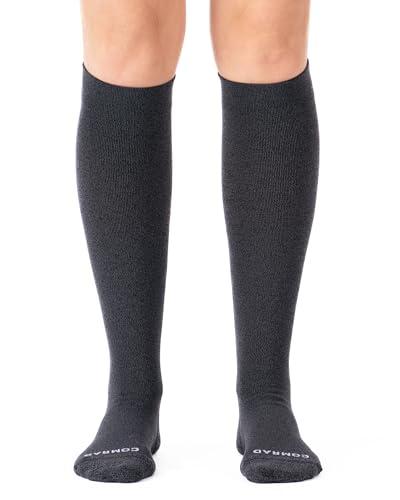
Comrad Knee-High Compression Socks 15-20 mmHg product photo

Comrad Knee-High Compression Socks 15-20 mmHg

Comrad's Medium level, with published calf circumference ranges per size and a stated threshold for going wide.

Most people, and anyone who does not already know their calf measurement8.8/ 10
$28.89 · View on Amazon

$33.99 · 15% off

2
JOBST Relief Knee-High 15-20 mmHg product photo

JOBST Relief Knee-High 15-20 mmHg

A compression-therapy manufacturer's everyday line at 15-20 mmHg, with full-calf sizes published as standard size labels.

A clinical garment at moderate pressure, and anyone whose calf needs a full-calf size8.3/ 10
$26.33 · View on Amazon

$31.00 · 15% off

3
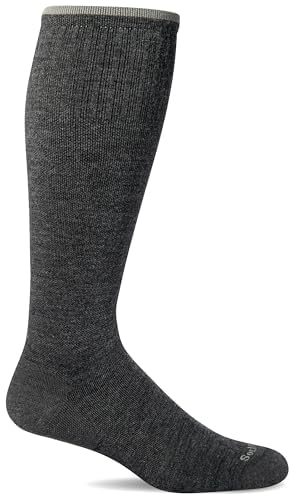
Sockwell Circulator Moderate Graduated Compression product photo

Sockwell Circulator Moderate Graduated Compression

The merino option at the moderate level, and the only sock on this page whose maker publishes what it is made of.

Twelve hours in a closed shoe without smelling of it afterwards8.1/ 10
$24.71 · View on Amazon

$32.95 · 25% off

4
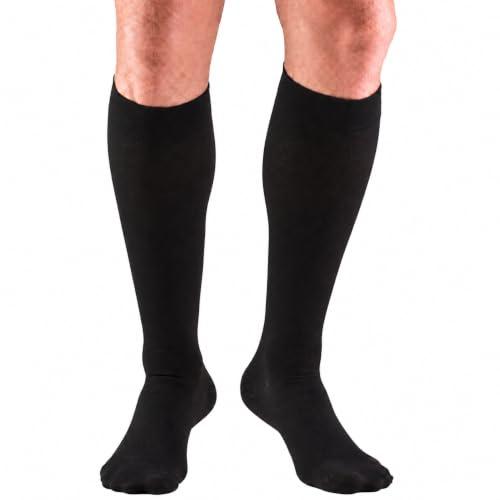
Truform Medical Knee-High 15-20 mmHg product photo

Truform Medical Knee-High 15-20 mmHg

Style 8875 from Truform's Classic Medical Wear line - latex-free, sized on ankle and calf, and rated by Truform itself as easy to apply.

Our budget pick: a medical hosiery maker at the cheapest price in the category7.9/ 10
$13.60 · View on Amazon

$15.99 · 15% off

Scores are our own editorial assessment of how well each product suits the job on this page. They are not a product rating from reviews and not the result of testing - we have not worn or used these. Prices come from Amazon and were last checked November 28, 2026; a button with no number means Amazon showed no live price at that check, so tap it for the current one. #ad

Start here. The Comrad 15-20 mmHg knee-high is the pick for most people, and it wins on information rather than fabric: it is the only sock here that publishes a calf circumference range for every size and a stated threshold for when to size wide. Our budget pick is the Truform 8875, a medical hosiery manufacturer's garment at the cheapest price in the category, sized on ankle and calf rather than shoe size. If your feet sweat in closed shoes, skip both and buy the merino one.

Nothing here is medical advice, nobody on this site has examined your legs, and new or worsening leg swelling is a clinical question rather than a shopping one. If a clinician has specified a compression level for you, that number wins over anything on this page.

Why 15-20 mmHg is the level to start on

The commonest way a person decides they hate compression socks is to buy 20-30 mmHg first, fail to get them on at 06:30 on the third morning, and never try again. Firm compression is the right answer for established swelling and it is the wrong first purchase for almost everybody else, because the sock that does not get worn does nothing at all.

Moderate compression is the prevention level: aching legs, end-of-shift heaviness, the general tiredness that comes from eleven hours on a hard floor. Two of the four makers on this page say so themselves in their own published material. Truform labels 15-20 mmHg as MODERATE and lists its intended uses as travel, minor swelling, spider veins, pregnancy, minor varicose veins and first-time wearers of therapeutic compression - and rates the application effort for the level as easy, may require mild effort. JOBST publishes its Relief line at 15-20, 20-30 and 30-40 mmHg and describes it as designed for everyday use, which is a clinical manufacturer saying out loud that the moderate level is a legitimate place to begin.

If you want the whole scale rather than one band, compression levels explained works through 15-20 against 20-30 properly, including what graduated actually means.

What this level will not do

Being straight about this is more useful than selling you a sock. Moderate compression is prevention. If your ankles are visibly swollen at the end of every shift, you are past the point where 15-20 mmHg does much, and the honest recommendation is the firm level instead - best 20-30 mmHg compression socks is that page, and compression socks for swelling is organized around the problem rather than the pressure.

It is also not the answer to diagnosed venous disease, and it is not a substitute for being seen. If a clinician has told you to wear 20-30 mmHg, buying down a level because it is easier to pull on defeats the entire point of wearing them.

The finding: three of these four will not tell you what they are made of

Put the four spec sheets side by side and the pattern is hard to miss - and once you see it, it is the clearest way to separate socks that otherwise look alike.

  • Comrad publishes a fiber composition for its 20-30 mmHg line and not for the 15-20 mmHg one.
  • JOBST publishes no fiber composition for the Relief line on its own product page, and no numeric size chart either.
  • Truform publishes no fiber percentages for any style in the line, although it does state that the fabric is completely latex-free.
  • Sockwell is the exception: a merino blend with bamboo rayon, named on the product page.

That matters practically rather than academically. Fiber decides whether your socks smell at the end of a twelve-hour shift in a closed shoe, and it decides how gently they have to be laundered - which in turn decides how long the compression lasts. If that is the axis you care about, there is exactly one answer on this page.

Measure your calf before you buy anything

This is the single highest-value thing on the page, and it applies at every pressure level. A sock in the wrong circumference either rolls down over the shift - at which point it is doing nothing - or digs a band into your calf, which hurts and also defeats the graduated gradient the sock is built around.

Measure the widest point of your calf in the morning, before your legs have swollen, and buy against a published range rather than a shoe size. Only one sock here lets you do that, and its rule is simple: over 17 in, choose a wide-calf option. JOBST gets you halfway by publishing L Full calf and XL Full calf as standard size labels, without publishing the measurement that puts you in them. If you are near or over that threshold, compression socks for wide calves is the page to read instead of this one - it is built entirely around the measurement and carries the full method.

Closed toe, open toe, and the shoe-size rule nobody mentions

Two of these four publish a toe option and one of them publishes a threshold for choosing it, which is unusual enough to be worth acting on. Truform's own guidance is that men should switch to the open-toe style above shoe size 7 in Small, 9.5 in Medium, 11.5 in Large and 12.5 in X-Large - because beyond that the closed toe box, which is designed to apply no compression to the toes, stops being roomy and starts pressing. JOBST offers both closed and open toe across the Relief line.

If you are at the top of a size band and the fit of your shoe is already tight, that is the detail that decides whether the sock is comfortable at hour ten. A seamless or pressure-free toe is also the feature that prevents the blister a twelve-hour shift otherwise rubs.

How these four were chosen

  • Genuinely 15-20 mmHg. Every sock here is sold at the moderate level by its own maker. Firm socks that happen to be comfortable are not on this page, and neither are the compression sleeves that get mixed in with socks in search results.
  • Published facts from the manufacturer. Each spec quoted above comes from Comrad, Sockwell, JOBST or Truform's own product page, all four cited at the bottom. Where a maker publishes nothing - and three of them publish no fiber composition - this page records the gap instead of filling it.
  • Sized on something real. Three of the four size on a leg measurement rather than a shoe size. The one that does not is on the page for its fabric, and that trade-off is stated in its entry.
  • Currently purchasable, checked against our live feed. All four returned a buyable offer at the most recent price refresh. The two newest entries were resolved to an in-stock, title-verified listing on the day this page was written.
  • Honest cons on every pick. One is a premium price for prevention-level pressure, one publishes no size chart, one publishes no fiber content, and one is medical hosiery that looks like medical hosiery. All of that is above.
  • No price written into the prose. Every price on this site is read live when the page loads, so nothing here anchors you to a stale number.

How many pairs, and when to replace them

Three pairs, realistically. Compression is a property of the knit and it degrades with washing, and a sock worn two days running is doing less on the second. That is why the per-pair price matters more in this category than the headline price of any single pair, and it is a large part of why the budget pick is on this page at all.

Wash cool, skip the dryer where you can, and do not use fabric softener: it coats the fibers and reduces both the elastic recovery and the moisture management. When a sock goes on easily and stops leaving a faint mark at the top of the calf, the compression has gone and the sock is a sock.

If you are not sure compression is your problem

Start with do compression socks help nurses rather than with a purchase, and if the pain is in your feet rather than your legs, it may be the wrong product entirely - swollen feet after a shift separates the two, and the footwear side of it is best shoes for standing all day. For the whole category sorted by use case rather than pressure, best compression socks for nurses is the roundup to start from, and best compression socks under $50 is the money question on its own.
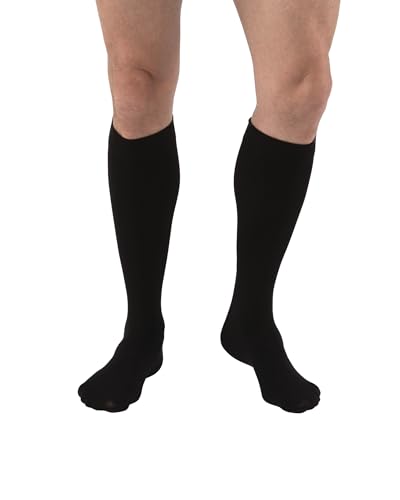
The picks in full

Every pick, in order

01

Most people, and anyone who does not already know their calf measurement

Comrad Knee-High Compression Socks 15-20 mmHg

Comrad's Medium level, with published calf circumference ranges per size and a stated threshold for going wide.

Comrad Knee-High Compression Socks 15-20 mmHg product photo

15-20 mmHg knee-high

Compression
15-20 mmHg, Comrad's Medium level
Wide calf
Offered on many knee-high styles
Calf sizing
Same published ranges as the 20-30 mmHg line
Fiber
Not published on the 15-20 mmHg listings located

Specs: Comrad - 15-20 mmHg knee-high collection

Fit is what decides whether a compression sock does anything, and this is the only brand in this registry that gives you the number you need: published calf circumference ranges per size - S 10-14 in, M 12-14 in, M Wide 14-16 in, L 15-17 in, L Wide 17-19 in, XL 18-20 in - plus an explicit rule that a calf over 17 in should choose a wide-calf option. Wide-calf versions exist across many styles rather than as a token two, which at the moderate level a lot of brands do not bother with. It is also noticeably easier to pull on than a firm sock, and the sock you can actually get on at 06:30 is the sock that helps you. Two honest gaps. Comrad publishes the fiber composition only for its 20-30 mmHg line, not this one, so you are buying a pressure level rather than a known fabric. And nylon does not manage odor the way wool does - in a closed clog across twelve hours that is noticeable. If a clinician has specified 20-30 mmHg for you, do not buy down a level because this one is easier to put on.

Published sizing9.8
Ease of donning9.4
Wide-calf coverage9.0
Fiber transparency2.6
Odor control4.0
Overall8.8 / 10

What it gets right

  • The right starting pressure for most people, with the same published calf measurements
  • Easier to get on than the firm level, which is what determines whether you actually wear them
  • Wide-calf options at the moderate level, which a lot of brands only offer in firm

What it gets wrong

  • Comrad does not publish the fiber composition for this line, only for the 20-30 mmHg
  • Prevention-level pressure only
  • Same nylon odor trade-off as the firm version

Who should skip itA clinician has told you to wear 20-30 mmHg. Buying down a level because it is more comfortable to put on defeats the point of wearing them.

$28.89 · View on Amazon

$33.99 · 15% off

#ad How we earn · price as of November 28, 2026

02

A clinical garment at moderate pressure, and anyone whose calf needs a full-calf size

JOBST Relief Knee-High 15-20 mmHg

A compression-therapy manufacturer's everyday line at 15-20 mmHg, with full-calf sizes published as standard size labels.

JOBST Relief Knee-High 15-20 mmHg product photo

15-20 mmHg clinical knee-high

Compression
15-20 mmHg - one of three levels JOBST publishes for the Relief line (15-20, 20-30, 30-40)
Construction
JOBST describes Relief as unisex circular-knit compression garments designed for everyday use
Sizes published
S, M, L, L Full calf, XL, XL Full calf - the full-calf labels are part of the published size list
Toe
Closed toe and open toe both offered; the linked listing is closed toe
Top band
No top band or Dot Band offered; JOBST does not state the Dot Band material
Colors
Black and beige on JOBST's own Relief page
Foot
Reinforced foot area

Specs: JOBST - Relief medical compression stockings (US site)

Most medical compression brands push you straight to 20-30 mmHg, which is a large part of why so many people conclude that compression is not for them. JOBST does not: the Relief line is published at 15-20, 20-30 and 30-40 mmHg, described as unisex circular-knit garments designed for everyday use, and that makes this the clinical option at the level a first-time wearer should actually start on. Two published details are genuinely useful. The size list is S, M, L, L Full calf, XL and XL Full calf, so a full-calf fit is a standard label rather than a sub-range you have to go hunting for. And both closed and open toe exist, which matters when your shoe size sits at the top of a size band. The gaps are real and they are JOBST's. The Relief page publishes no fiber composition at all, and no numeric size chart either - it says the garments are easy to measure without giving you the measurements. Its own styles list and its product filter disagree about which lengths exist, so confirm the exact SKU. It comes in black and beige, and it looks like what it is.

Clinical credibility9.4
Published size range8.6
Toe options8.8
Fiber transparency1.5
Appearance3.2
Overall8.3 / 10

What it gets right

  • A clinical compression-therapy manufacturer at the moderate pressure level, which is unusual - most medical brands push you straight to 20-30 mmHg
  • Full-calf sizes are published as standard size labels rather than hidden in a wide-calf sub-range
  • Closed and open toe are both offered, which matters if your shoe size is at the top of a size band
  • Reinforced foot area, and a stated everyday-wear design rather than a post-surgical one

What it gets wrong

  • JOBST publishes no fiber composition for the Relief line on its own product page
  • No numeric size chart on the Relief page either - it says the garments are easy to measure without giving the measurements
  • The styles list on JOBST's page and its own product filter disagree about which lengths exist, so confirm the SKU
  • Beige and black only: this is a medical garment and it looks like one

Who should skip itYou want a sock you can buy by shoe size in five minutes. A clinical garment with full-calf size labels is worth the measuring, but it is measuring.

$26.33 · View on Amazon

$31.00 · 15% off

#ad How we earn · price as of November 28, 2026

03

Twelve hours in a closed shoe without smelling of it afterwards

Sockwell Circulator Moderate Graduated Compression

The merino option at the moderate level, and the only sock on this page whose maker publishes what it is made of.

Sockwell Circulator Moderate Graduated Compression product photo

15-20 mmHg merino blend knee-high

Compression
15-20 mmHg, moderate graduated
Fiber
Merino blend with bamboo rayon
Sizes
Men's and women's versions

Specs: Backcountry - Sockwell Circulator Compression Socks

There is one situation where the fabric matters more than the millimeters: a closed clog, twelve hours, and a sock that has to go back in a locker. Merino solves that and synthetics do not, and this is the merino sock at the moderate level - a merino blend with bamboo rayon, which makes Sockwell the only maker on this page that tells you what you are buying. It is also easier to get on than the firm Elevation, which is the practical barrier nobody warns you about. Three costs. It is a premium price for a prevention-level sock, and compression degrades with washing, so a pair you rotate in threes is an expensive habit. Merino needs gentler laundering than nylon. And the sizing is the weak point: Sockwell sizes by shoe size with no published calf circumference at all, which is a real gap next to the two picks above it. One warning worth repeating because people get caught by it constantly: Sockwell's Elevation line is the 20-30 mmHg one and the Circulator is this 15-20 mmHg one. Check the line name, not the brand.

Odor control9.6
Fiber transparency8.4
Ease of donning9.0
Sizing information3.6
Value5.2
Overall8.1 / 10

What it gets right

  • 15-20 mmHg is where most people should actually start, and this is the merino option at that level
  • Noticeably easier to get on than a 20-30 mmHg sock, which is the practical barrier nobody warns you about
  • Same merino odor advantage as the Elevation

What it gets wrong

  • Not enough pressure for established swelling or varicose veins - that is the Elevation's job
  • Still a premium price for a moderate-compression sock
  • Merino laundering requirements

Who should skip itYour ankles are visibly swollen at the end of every shift. Moderate compression is a prevention level, and visible swelling is past the point where it does much.

$24.71 · View on Amazon

$32.95 · 25% off

#ad How we earn · price as of November 28, 2026

04

Our budget pick: a medical hosiery maker at the cheapest price in the category

Truform Medical Knee-High 15-20 mmHg

Style 8875 from Truform's Classic Medical Wear line - latex-free, sized on ankle and calf, and rated by Truform itself as easy to apply.

Truform Medical Knee-High 15-20 mmHg product photo

15-20 mmHg knee-high, budget

Compression
15-20 mmHg, labeled MODERATE by Truform; style 8875 in the Classic Medical Wear line
Stated use
Truform lists travel, minor swelling, spider veins, pregnancy, minor varicose veins and first-time wearers of therapeutic compression
Ease of application
Truform's own rating for this level: easy, may require mild effort
Latex
Truform states the smooth-knit fabric is completely latex-free
Measuring
Ankle circumference, calf circumference and length to knee - the size chart itself is published only as an image
Toe
Closed toe box applies no compression to the toes; Truform tells men to choose open toe above shoe size S 7, M 9.5, L 11.5, XL 12.5
Colors
Beige, black, brown, white, charcoal and grey across the line, not all in every style

Specs: Truform - Medical Knee High Closed Toe (style 8875, 15-20 mmHg)

This is the cheapest way onto this page and it is not a compromise on the things that matter most. Truform is a medical hosiery manufacturer, style 8875 is its 15-20 mmHg knee-high, and the brand labels that level MODERATE and lists exactly who it is for: travel, minor swelling, spider veins, pregnancy, minor varicose veins and first-time wearers of therapeutic compression. Truform also rates the application effort for this level as easy, may require mild effort, which is a more honest piece of information than most brands publish. It is sized on ankle circumference, calf circumference and length to knee rather than on shoe size, which is the correct basis, and Truform states the smooth-knit fabric is completely latex-free - a detail that matters more in a hospital than anywhere else. Now the gaps. No fiber composition percentages are published for any style in the line. The size chart exists only as an image, so the ankle and calf ranges are not readable as text. Standard and super sizes are mentioned with no measurements attached, so wide-calf buyers get no published threshold the way Comrad gives one. And one specific instruction to follow rather than ignore: Truform tells men to choose the open-toe style above shoe size S 7, M 9.5, L 11.5 and XL 12.5, because past that point the closed toe box stops being roomy.

Value9.8
Correct sizing basis8.8
Latex-free disclosure9.4
Fiber transparency1.5
Styling2.8
Overall7.9 / 10

What it gets right

  • A medical hosiery manufacturer's garment at the cheapest price in this category - the combination barely exists
  • Sized on ankle and calf circumference rather than shoe size, which is the correct basis
  • Explicitly latex-free, which matters in a hospital more than it does anywhere else
  • Truform rates this level as easy to apply, and it names first-time compression wearers as the intended buyer

What it gets wrong

  • No fiber composition percentages published for any style in the line
  • The size chart is an image rather than text, so the ankle and calf ranges are not readable without opening it
  • Standard and “super” sizes are mentioned with no measurements attached, so wide-calf buyers get no published threshold
  • Beige-and-grey medical hosiery styling, in a category where other brands sell colors

Who should skip itYour shoe size is at the top of your size band and you want a closed toe. Truform's own guidance is to switch to open toe past a stated shoe size, and ignoring it is how a closed toe box stops being roomy.

$13.60 · View on Amazon

$15.99 · 15% off

#ad How we earn · price as of November 28, 2026

FAQ

Questions people actually ask

Is 15-20 mmHg enough for a 12-hour shift?

For prevention, yes - aching, heaviness and general end-of-shift tiredness are what the moderate level is for, and both Truform and JOBST publish 15-20 mmHg as an everyday compression level. For established swelling, visible varicose veins, or anything a clinician has flagged, it is not enough, and the firm level is the honest answer.

Should I start at 15-20 or 20-30 mmHg?

Start at 15-20 unless a clinician has told you otherwise. Firm compression is harder to put on, and the most common reason people abandon compression entirely is buying the firm level first. Truform rates the application effort at this level as easy, may require mild effort - which is exactly the quality that gets a sock worn five days a week.

What are the best 15-20 mmHg compression socks for wide calves?

Comrad, because it is the only brand here that publishes a calf circumference range per size along with a stated rule - over 17 in, choose a wide-calf option - and it offers wide-calf versions at the moderate level rather than only in firm. JOBST publishes L Full calf and XL Full calf as standard size labels but does not publish the measurement that puts you in them. Our wide-calf page carries the measuring method in full.

Are cheap 15-20 mmHg compression socks any good?

The cheapest sock on this page is made by a medical hosiery manufacturer, sized on ankle and calf circumference, and stated to be completely latex-free - so price alone is not the problem at this level. What you give up is disclosure: no fiber percentages, and a size chart published only as an image. Get the size right and a budget moderate sock is a genuine recommendation rather than a consolation prize.

Merino or nylon at 15-20 mmHg?

Merino if your feet sweat and your shoes are closed, which is the exact situation where a synthetic sock ends the shift smelling bad and wool does not. It is also the only sock on this page whose fiber content is published at all. Nylon if your feet stay dry: it launders more easily, holds compression well and costs less.

How this page was put together

We start from the problem the gear has to solve over twelve hours, shortlist products that are currently sold, compare the manufacturers’ published specifications against what that problem actually needs, and read owner feedback at volume to find the failure modes worth reporting. We have not worn, used or physically tested any of this. Where a figure comes from a manufacturer we name them; where published figures disagree with each other we say so rather than picking the flattering one; where nobody publishes a figure we say that too. Prices are never typed into the page: they come from Amazon’s API with the date they were checked, and they expire on their own. Read the full method.

Sources

  1. 01Comrad - 15-20 mmHg knee-high collection: Comrad's Medium level with calf circumference ranges published per size (S 10-14 in, M 12-14 in, M Wide 14-16 in, L 15-17 in, L Wide 17-19 in, XL 18-20 in) and the stated over-17-in wide-calf threshold; fiber composition published only for the 20-30 mmHg line
  2. 02JOBST - Relief medical compression stockings (US site): unisex circular-knit garments designed for everyday use, published at 15-20, 20-30 and 30-40 mmHg, sizes S / M / L / L Full calf / XL / XL Full calf, closed and open toe, black and beige, reinforced foot area; no fiber composition or numeric size chart published on the page
  3. 03Truform - Medical Knee High Closed Toe, style 8875 at 15-20 mmHg labeled MODERATE: stated uses are travel, minor swelling, spider veins, pregnancy, minor varicose veins and first-time wearers; application effort easy, may require mild effort; smooth-knit fabric completely latex-free; measured on ankle circumference, calf circumference and length to knee with the size chart published as an image; men advised to choose open toe above shoe size S 7 / M 9.5 / L 11.5 / XL 12.5
  4. 04Backcountry - Sockwell Circulator Compression Socks: 15-20 mmHg moderate graduated, merino blend with bamboo rayon, men's and women's versions, sized by shoe size with no published calf circumference
  5. 05Shift & Sole live Amazon price and availability feed, read at request time by lib/prices.ts: all four picks returned a buyable offer at the most recent refresh, and both newly added listings were title-verified and in stock when resolved