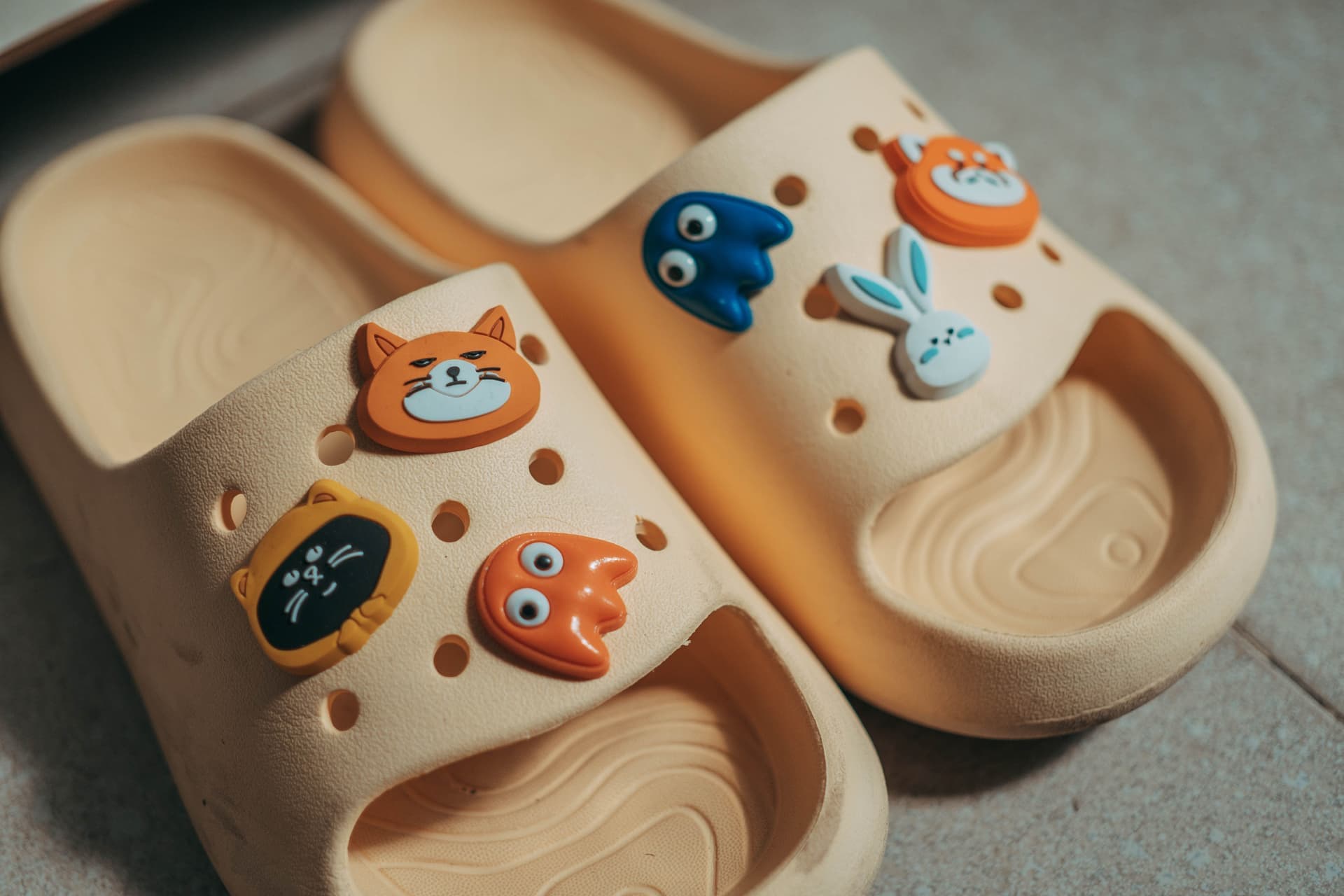
The short answer: the classic clog with the holes, no. It fails most hospital dress codes on the ventilation holes alone, before anyone discusses comfort. The work models, genuinely yes - for someone whose feet do not already hurt. If they do, this is the wrong category and no amount of softness changes that.
The model question comes first
Two features separate a work Croc from a beach Croc, and both are compliance features rather than comfort ones.
An enclosed toe. The holes in a classic clog are a direct fluid-exposure route onto your foot, which is why dress codes name them specifically. Work models are the same material with no holes.
A rated slip-resistant outsole. Work models use the Crocs Lock tread, which Crocs describes as giving traction on wet, oily, icy and greasy surfaces, and whose listings cite ASTM F2913 and EN ISO 20347:2012 OB. The classic clog has none of that.
So if someone tells you Crocs are not allowed in hospitals, they are usually right about the model they are picturing and wrong about the range. The model guide goes through which is which.
What they are genuinely good at
Weight. Nothing else in this category is close. Over 15,000 steps that is thousands of repetitions your hip flexors do not perform, and people who switch often report less hip and lower-back fatigue rather than less foot pain.
Decontamination. A molded closed-cell shell has nothing to absorb and no seams to wick. A spill rinses off and the shoe is dry in minutes - where a knit sneaker is out of service for a day. On a messy unit with one pair of shoes, that is an operational advantage rather than a convenience.
Forefoot room with no pressure points. No stitching, no overlays, nothing pulled tight across your foot. It is why they appear on the bunions page and the wide-feet page, where that matters more than cushioning.
Price. The cheapest route to a shoe your employer will accept, by a wide margin.
What they cannot do
Hold your arch. This is the real objection and it is not snobbery. There is no shank. Over a long static shift, a shoe with no shank transfers the work of maintaining your arch to your arch, which is the exact mechanism behind feet “giving out” around hour eight. If you have plantar fasciitis or a collapsing arch, this is a bad platform.
Control your heel. A soft shell has no firm heel counter, so your heel is not held in position - and a slip-on stays on by pressure, which is a problem on a unit where you move fast.
Last. Foam compresses permanently and the shell keeps its shape perfectly while the cushioning goes, so there is no visual signal that the shoe is finished. It is the easiest shoe in this category to wear long past its useful life.
The fix that makes the answer yes more often
Buy the work model whose insole lifts out, and put a rigid insole in it. That combination gives you slip resistance, waterproofing, almost no weight, and real arch support with a deep heel cup - for well under the price of a leather clog.
It is not a complete substitute: the heel counter is still soft and the shoe still has a shorter life. But it addresses the main objection directly, and almost nobody writing about this suggests it.
Sizing, which is genuinely inconsistent
Reviewer reports conflict - most say the work models run large and advise sizing down, a minority say true to size. Croslite also softens slightly with body heat, so a shoe that is snug at 7am is looser by mid-shift. If your feet swell, take the larger size; otherwise size down, and buy somewhere that takes returns.
So: are they good for nurses?
Yes if: your feet do not currently hurt, your unit is messy, your budget is real, your step count is moderate, and you buy a work model - ideally with an insole in it.
No if: you have heel pain or a collapsing arch, you work a unit where you run, or you want one pair of shoes to last years. Those are three different reasons and any one of them is enough.