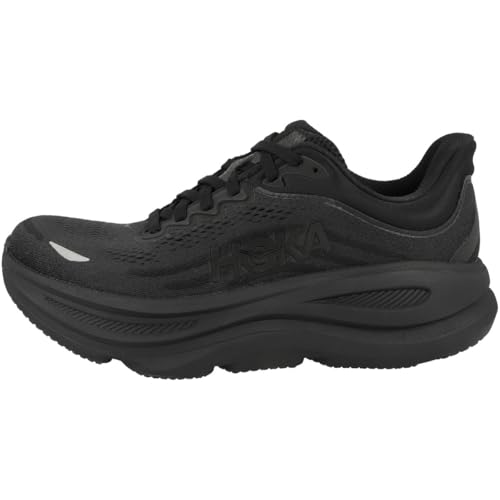
Pregnancy footwear advice usually amounts to "wear something comfortable," which is useless to anyone who already stands for twelve hours. The useful version starts from what measurably changes. In a prospective study at the University of Iowa, 49 women were measured in the first trimester and again about five months after delivery: arch height and arch rigidity both decreased significantly, and foot length increased by between 2 and 10 mm. Most of the change occurred in first pregnancies, and the authors concluded the arch flattening appeared to be lasting rather than temporary.
Two to ten millimeters is up to most of a shoe size. That single finding reorders everything below, because it means you are not buying a shoe for a temporary condition - you may be buying the first shoe of a foot you are going to keep.
What actually decides the shoe, in order
- Room to grow, in width before length. Feet in pregnancy get longer and spread, and daily swelling sits on top of that. A shoe that is snug in month four is a problem in month eight. Buy the brand with the deepest width range, not a half size up.
- Can you get it on without bending? This is the criterion nobody lists and everyone eventually cares about. By the third trimester, laces are a genuine obstacle, and a shoe you cannot fasten alone is a shoe you will stop wearing.
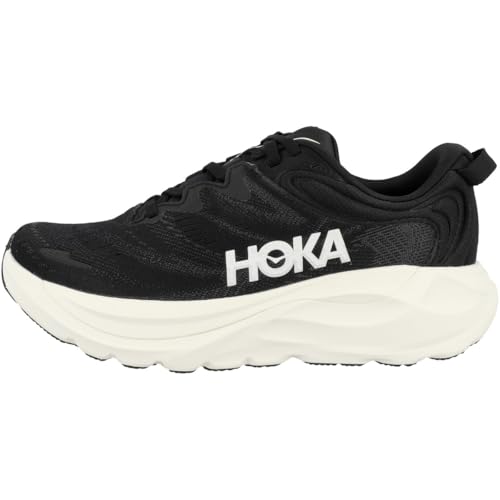
- Stability from the base, not from correction. Your arch is losing rigidity and your center of mass has moved. A wide, flared platform addresses that. A corrective medial post aimed at a foot you no longer have does not.
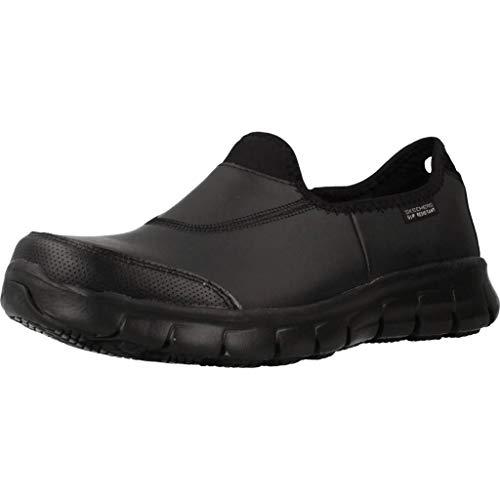
- Slip resistance and a wipeable upper. Unchanged by pregnancy, except that the consequences of a fall are not. If your unit requires a rated shoe, that requirement outranks everything above it.
- Weight. You are already carrying more. A 14 oz leather work shoe is a different proposition in month eight than it was in month two.
- How long you need it to last. If your size is still moving, a cheaper shoe bought twice can beat an expensive shoe bought once in the wrong size.
Buy for month eight, not for today
The practical version of the Iowa finding is a fitting rule: measure late in the day, when your feet are at their largest, and fit the shoe with the thickest sock you will actually wear. If you are early in a first pregnancy, assume the foot is going to get wider and plan for the width you will need rather than the one that feels right now.
It also means you should not throw out shoes that stop fitting on the assumption that they will fit again. The study found no significant change in how pressure was distributed across the foot, but it did find the arch had flattened and stayed flatter. Hoping a shoe will fit again in six months is not a plan; measuring both feet again is.
Laces are the thing that catches people out
Everyone anticipates the swelling. Almost nobody anticipates that tying a shoe becomes awkward, then difficult, then a two-person job. It arrives faster than expected and it arrives on a workday.
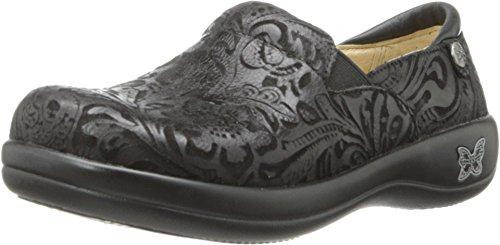
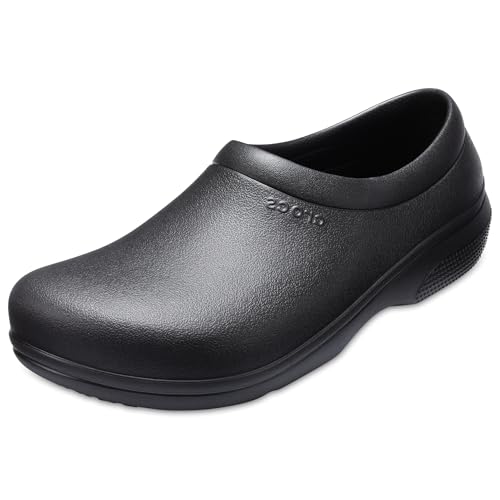
There are three honest answers. A laceless slip-on with a leather upper is the simplest. An elasticated-instep shoe with a closed back gives you step-in entry without giving up heel retention. Elastic no-tie laces in a shoe you already own are the cheapest, and they work - with the caveat that they change how the shoe holds your foot, so try them before a twelve-hour shift rather than during one.
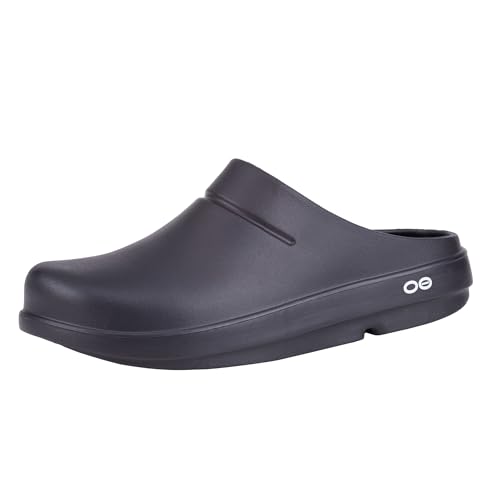
What is not an answer is an open-backed clog. It solves entry by removing heel retention entirely, which is the wrong trade when your balance has changed - and clogs against sneakers makes that case in general, before pregnancy is even in the picture.
Support, but the right kind
"More support" is where this advice usually goes wrong. A stability shoe built around a firm medial post is designed to resist a specific motion. What pregnancy does is reduce arch rigidity and shift your mass forward - and the intervention that matches is a wider base under the whole foot.
That is why the stability pick above is the one with the widest platform rather than the firmest correction, and why the pick order does not simply run from most to least supportive. If you already know you overpronate and already wear a stability shoe, stay in that category and size for the change. The flat-feet page covers the structural case properly, and it applies in full if your arches were already low before you were pregnant.
Swelling, compression, and what the evidence actually supports
Leg and foot swelling is the symptom people most want solved, and compression is the thing most often sold for it. Here is the honest state of the evidence, which is less flattering than the marketing.
A Cochrane review of interventions for varicose veins and leg edema in pregnancy reported that external compression stockings did not appear to have advantages in reducing edema, with one small trial finding no significant difference in lower leg volume against rest. A separate review of prophylactic use reported that stockings reduced the emergence of leg symptoms but not the veins themselves. NICE puts it plainly: compression stockings can improve the symptoms but will not prevent varicose veins from emerging.
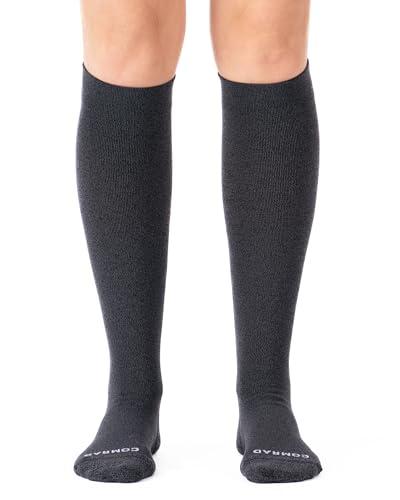
So: reasonable for how your legs feel, not a treatment for the swelling itself, and not a preventive for veins. Start at 15-20 mmHg rather than 20-30, measure your calf because that changes too, and read compression levels explained before you spend on three pairs.
And the line that matters: swelling in pregnancy can also be a sign of something that needs a clinician - sudden swelling, swelling in one leg only, swelling with headache or visual changes, or any calf pain. None of those are shopping problems. This page is about shoes; anything in that list goes to your provider the same day.
Fit rules that are specific to this
Measure both feet, late in the day. Asymmetry is normal and pregnancy does not respect it. Fit the larger foot.
Leave a thumbnail of space at the toe, not a thumb. Too much length is its own problem - it makes the shoe flex in the wrong place, which is how people end up with forefoot pain they blame on the pregnancy.
Go up in width before you go up in length. Spread is the change; length is a side effect of it. A longer shoe in the same width still presses where it was pressing.
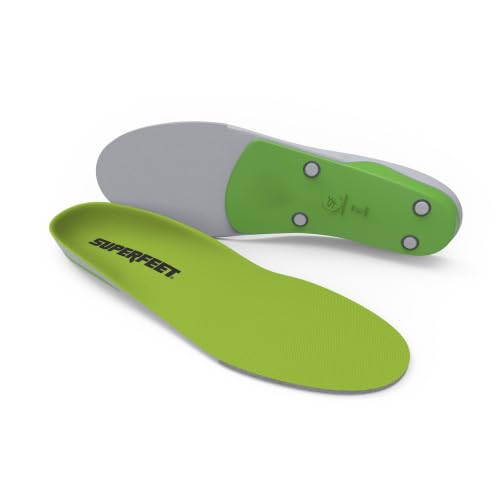
Try it with the insole you will use. If you are adding structure, the shoe has to be fitted with that structure in it, because it takes up volume.
Expect to replace them sooner. Carrying more weight over the same mileage compresses midsole foam faster. When to replace nursing shoes has the general rule; shorten it.
What we left off, and why
Previous-generation bargains. There are good deals on superseded models right now, and we did not put one on this list. If you are buying against a deadline and may need the same shoe in a different size in two months, a discontinued generation is the wrong thing to standardize on - your size and colorway may simply be gone.
Maternity compression hosiery as a category. Pregnancy-specific panty-style hosiery exists, but we found no product in it with published pressure gradients and calf measurements that we could verify, and a compression garment with no published numbers is not something this site recommends.
Anything sold as treating pregnancy symptoms. Insoles, socks and shoes do not treat edema, sciatica or pelvic pain. Where the evidence supports symptom relief we say so, and where it does not, we leave the claim out rather than hedging it into something that reads like an endorsement.
If you are also on your feet after the baby
The arch change the Iowa study measured was still present five months after delivery, so the shoes you buy now are likely the shoes you need afterward - in the size and width you ended up with, not the one you started in. Re-measure before you buy the next pair rather than re-ordering what you wore at 36 weeks.
If your feet hurt in a new, specific way rather than a general one, the foot pain guide sorts the patterns, and the twelve-hour roundup covers the two-pair rotation that outlasts any single pair on this page.