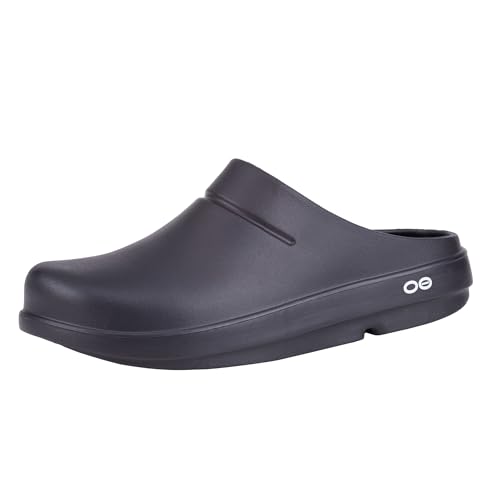
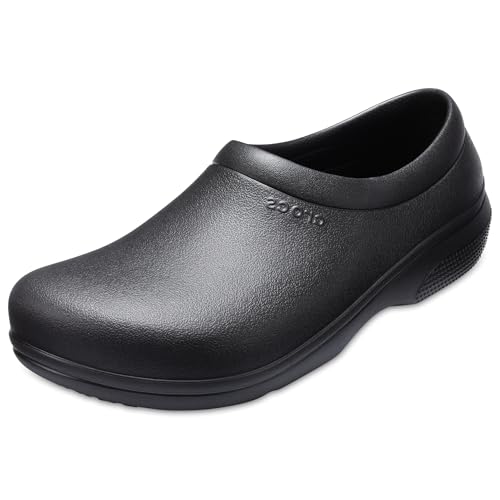
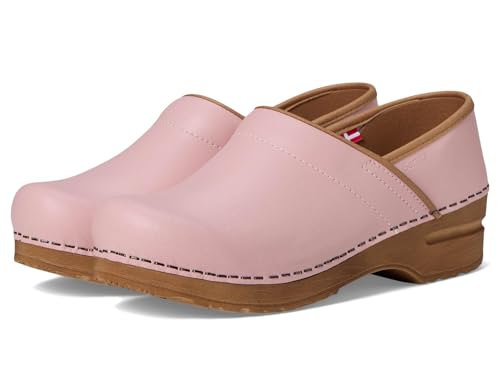
Dansko earned its position honestly. The Professional is APMA Accepted, its rocker outsole does part of the work of walking for you, its shank is genuinely rigid so your arch is not holding the shoe up, and it is stocked widely enough that a colleague on your unit has probably already tried the exact pair you are considering. None of that is marketing, and nothing below is an argument that the shoe is bad. It is an argument that "a Dansko alternative" is four different requests wearing one search phrase, and that the shoe you should buy depends entirely on which one you are making.
Why people actually look for an alternative
Sort the complaints and they land in four piles, almost never more:
- The open back. An open-back clog stays on by pressure, not by being fastened. It clatters on stairs, it slides at the heel, and it is the wrong shoe for anything faster than a brisk walk - which is why ER and code-team nurses say so consistently.
- The weight. A leather clog on a rigid platform is heavy, and you notice it on stairs and in your hips rather than in your feet.
- The break-in. It is real, the first two shifts are unpleasant, and plenty of people return the shoe in week one having never reached the part where it works.
- The price. A professional clog is a lot of money for footwear you will destroy in eighteen months, and a second pair is not a luxury on a floor where one pair never dries.
There is a fifth that comes up less and matters more: compliance. Dansko does not state slip resistance for the standard Professional on its own product page. If your employer names a test standard, the famous clog may not clear it while a cheaper shoe does.
The three mechanisms you have to replace
Before you pick a substitute, be clear about what you are substituting. A Dansko Professional does three distinct things, and almost every alternative keeps one or two of them and drops the rest.
1. The rocker outsole
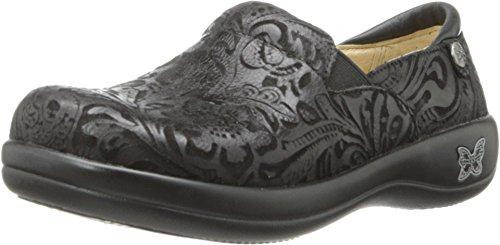
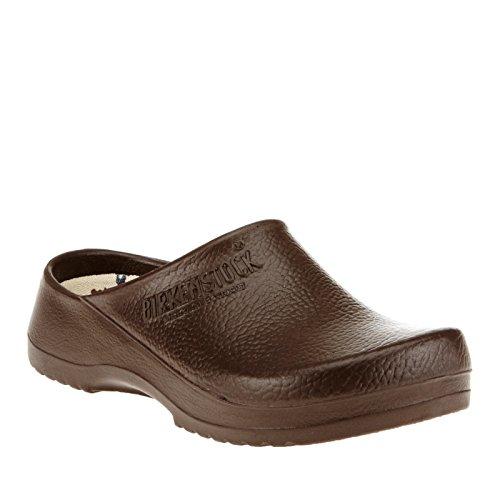
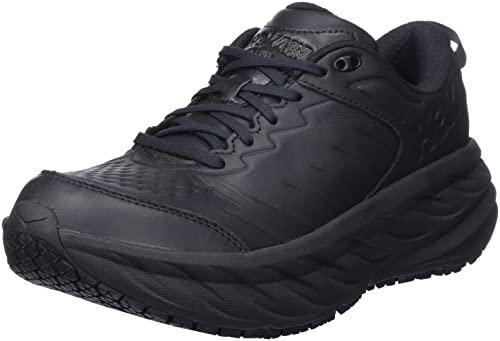
The curved polyurethane bottom rolls you from heel to toe, which reduces how much your own foot and calf have to do over tens of thousands of steps. This is the mechanism people miss most when they switch, and the one they are least able to name. Sanita keeps it. Birkenstock’s Super-Birki partly keeps it. Alegria, HOKA, OOFOS and Crocs do not.
2. The rigid shank
A Dansko does not fold. That matters because a shoe that flexes under your arch is a shoe your arch is holding up, all shift. The supportive alternatives replace rigidity either with a different rigidity - cork that has set to your foot, a structured footbed - or with volume, which is what a maximal cushioned midsole does. A foam clog replaces it with nothing, and that is the honest trade-off for the softness.
3. The wipe-clean upper
Leather, or coated leather, does not absorb what gets spilled on it. This is the quiet reason clogs persist in hospitals when the entire rest of the world moved to mesh sneakers. Any alternative on a floor where fluids happen has to answer this, and the ones that answer it best here are the Super-Birki (a published wash temperature), the Bondi SR (unperforated water-resistant leather) and the On The Clock (waterproof Croslite).
How these six were chosen
Criteria first, in this order, because a list of "comfortable shoes" is not an answer to this question:
- It replaces a named Dansko mechanism. Not "also comfortable" - each pick below is here because it keeps the rocker, or closes the heel, or disinfects, or costs less, and the entry says which.
- Published specifications exist. Where a figure could not be sourced to a manufacturer or a lab, it is labeled that way rather than filled in. Several of these entries record conflicts between a brand’s own listings, because those conflicts are real and you will hit them at checkout.
- It is currently sold in the US. Availability was re-checked for every pick when this page was written. One of them - Sanita - has patchy stock, and that is stated in its entry rather than hidden.
- Compliance is named, not implied. Where a slip-resistance standard exists, the standard is named; where a brand only says "slip resistant," the page says that is all it says.
- Honest cons on every pick. Including on the shoe we rank first.
Nobody here has worn any of these on a shift. This is a research site and we say so on every page; the scores above are our reading of published specifications and aggregate owner feedback, not a wear test.
Start from your objection, not from the brand
The fastest way through this page is to find your own sentence below.
"I like the shoe, I just do not want to pay that." Sanita first, because it is the same construction at a lower typical price, and Crocs On The Clock if the gap needs to be much larger. Be realistic about what the cheap option gives up: an enclosed toe and a rated outsole, yes; arch support, no.
"It keeps coming off my heel." Alegria Keli. A closed back with instep gores is a different fastening principle, not a tighter version of the same one. If you want a closed-back option that is still a sneaker rather than a professional shoe, the nursing clog roundup covers that boundary properly.
"My feet are fine, my hips and knees are not." HOKA Bondi SR for a compliant unit, OOcloog for a clinic with no slip rule. Both reduce impact rather than guiding motion. If this is your situation, shoes for nurses with bad knees is the page built around it.
"I get fluid on my shoes." Super-Birki if you want to disinfect at temperature, On The Clock if you want to hose it down and move on, Bondi SR if you want it to still look like a shoe afterwards. There is also a dedicated waterproof roundup.
"I wear a custom orthotic." Alegria Keli or Super-Birki, because both footbeds come out. That single specification eliminates most of this category, and it eliminates the standard Dansko Professional too - the removable footbed is on the XP 2.0, not the Professional.
What none of these replace
Two things, and pretending otherwise would be dishonest.
The ability to try one on. Dansko’s retail presence is far wider than Sanita’s, Alegria’s or Birkenstock’s professional line. Clog fit is not something to guess at: the volume over your instep matters more than your length, and a half size is the difference between a shoe that stays on and one that does not. If you cannot get your foot into a pair somewhere, buy from a retailer with a return policy you have actually read.
The hallway consensus. There is practical value in wearing what the three people on your unit with the oldest knees are wearing, because they will tell you how the shoe ages, which colorway cracks and whether to size up. You lose some of that the moment you switch brands. It is a real cost and it is not on any spec sheet.
Three things to check before you switch
- Your employer’s footwear policy, in writing. If it names an ASTM or EN standard, check that exact standard against the exact SKU you are buying - not the brand, and not a similar model. Listings in this category routinely cite different test versions for the same shoe.
- Whether the footbed comes out. If you use an orthotic, or expect to, this is a yes-or-no filter and it is cheaper to apply before you buy than after.
- How you will replace them. A professional clog that lasts eighteen months and a foam clog that lasts eight are not comparable purchases, and neither is better until you decide which pattern of spending you prefer. Our page on how often to replace nursing shoes lays out the wear signals that actually matter.
If you are still weighing a Dansko against one specific rival
This page is the one-to-many version. For one-to-one, the site already has the head-to-heads: Dansko vs Sanita for the like-for-like, Dansko vs Alegria for the open-back question, Dansko vs Birkenstock for the footbed mechanisms, Dansko vs OOFOS for rigid against soft, and Dansko vs Crocs for the price argument. If you have not settled on a clog at all, clogs vs sneakers for nurses is the upstream decision, and the main nursing shoe roundup is where to start from scratch.
Two related pages worth a minute if you are mid-switch: scrubs have the same brand-premium question and the FIGS alternatives page works through it the same way, and if your feet are the reason you are here at all, how to stop foot pain from standing all day covers what no shoe fixes on its own.