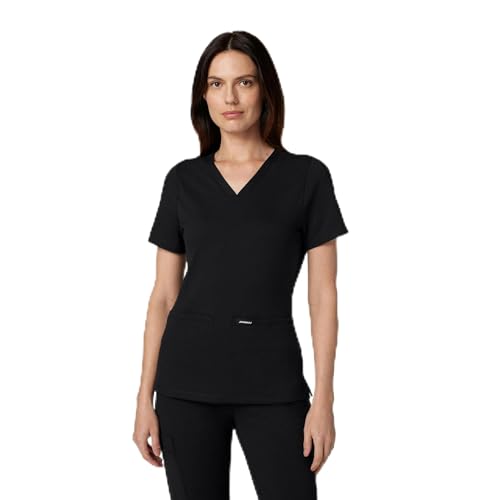
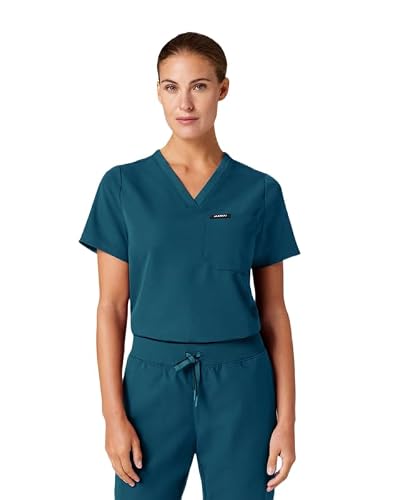
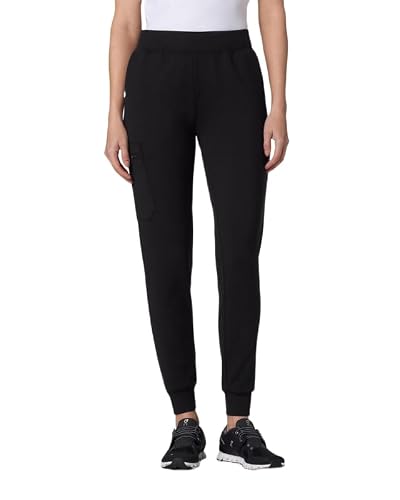
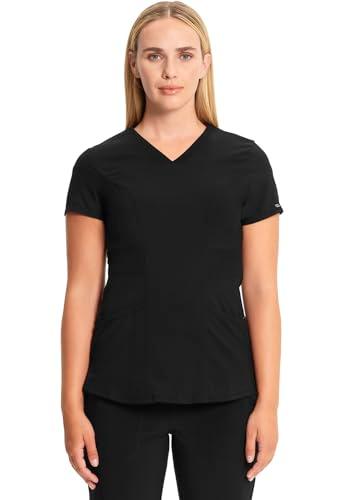
FIGS is the brand that turned scrubs into a product people have opinions about. Its FIONx fabric is a polyester-rayon-spandex blend with four-way stretch, moisture wicking and anti-wrinkle properties stated; the Zamora high-rise jogger genuinely stays up when you bend, which is a bigger deal across twelve hours than anything on a spec sheet; and the Yola 2.0 carries eleven pockets, which is more storage than most scrub tops and pants put together. If you are searching for an alternative, it is almost never because the garment is bad. It is because one specific thing about owning it does not fit your job, your laundry or your budget - and which one decides what you should buy instead.
The four reasons people leave, and what each one rules out
- Price. A premium top plus a premium pant is a real amount of money, and you need four or five sets, not one. This is the most common reason and the easiest to solve.
- Laundry. This is the one people discover late. A polyester-rayon-spandex blend is not an industrial-laundry garment: if your employer launders your scrubs centrally at hospital temperatures, you will not get them back the same shape. That single fact eliminates most premium scrubs and a couple of the picks below.
- Cut. The slim and skinny fits are slim and skinny. The Zamora is cut close through the thigh and seat, and a skinny-leg pant over a 20-30 mmHg compression sock is a fight you will have twice a day.
- Disclosure. This is the quiet one. Our registry’s composition figures for the Zamora come from a retailer listing rather than FIGS’s own product page, the Yola’s exact composition is not stated on the listings we could locate, and the antimicrobial treatment is noted inconsistently across sellers. If you like knowing what you are buying, that is a fair objection to raise at premium prices.
The specification that sorts this whole category
Scrub marketing runs on adjectives - soft, buttery, breathable, substantial. There is exactly one number that turns those adjectives into something you can compare, and it is fabric weight in oz/yd2. It tells you three things at once: how opaque the garment will be, how warm it will run, and whether it will drape or stand away from you.
Almost nobody publishes it. Jaanuu does, on its tops, and the gap between its two is enormous - 6 oz/yd2 on the Rhena against 9.7 oz/yd2 on the Cesi. Those are not two shades of the same fabric; they are near opposites, and the published numbers are why you can choose between them before you own either. Cherokee publishes a composition and an antimicrobial wash count. Dickies publishes a size range and a center back length. FIGS publishes a fabric name.
That is not a scandal - it is how the category works, and our page on where the published specs disagree catalogs how often the numbers that do exist contradict each other. But when you are replacing a garment you already like, a published number is the closest thing to a guarantee you will get, and it is why the two Jaanuu tops are ranked where they are below.
How these five were chosen
- It answers one of the four reasons. Each pick is tied to a specific objection - price, laundry, heat, or wanting a number - and its entry says which. A garment that is merely also nice is not an alternative.
- Fiber content is known. Four of the five publish a composition. The fifth - the Rubi jogger - does not, and that is written into its entry as a con rather than smoothed over.
- It is currently purchasable in the US. Availability was re-checked for every pick when this page was written. One registry brand was deliberately left off for failing that check (see below).
- The size range is published. A premium fit is worthless if the brand stops three sizes before you.
- Honest cons on every pick, including the one ranked first.
One brand that is in our registry is not on this page: the WonderWink W123 line. When we re-checked availability for this page, retailer listings read as broadly out of stock, with back-in-stock notifications and final-sale banners rather than inventory. The line may well return, but a garment you cannot reliably buy today is not an alternative we are going to recommend today. Our existing WonderWink against FIGS comparison still lays out the fabric argument if you find the line in stock.
Nobody here has worn any of these garments on a shift. This is a research site and we say so on every page; the scores above are our reading of published specifications and aggregate owner feedback, not a wear test.
Match the garment, not the brand
FIGS sells a system - the tops, the pants and the colors line up. The practical way to leave it is one garment at a time, because the replacement for a jogger and the replacement for a top are not made by the same company.
Replacing a FIGS top
Decide first whether you are replacing the feel or the function. If it is the feel, the Jaanuu Cesi is the softest fabric on this page and publishes the weight to prove it. If it is the function - stretch, pockets, something that survives your hospital’s laundry - the Cherokee Infinity is the better buy and costs less. If you run hot, neither: the Rhena at 6 oz/yd2 is the only pick here designed around heat, and the hot-flash page goes further into that problem.
Replacing a Zamora jogger
The Jaanuu Rubi is the closest silhouette match from another premium brand. If you want the jogger look at a lower price, our jogger scrubs roundup covers the range below premium, and be honest with yourself about the cuff: a jogger hem keeps fabric off the floor, which is a hygiene point as much as a style one, and a straight-leg pant does not.
Replacing a Yola or a Kade for the pockets
Nothing here matches eleven pockets, and that is worth stating plainly rather than pretending. If pocket count is the actual reason you buy FIGS, you are better served by keeping the pants and replacing something else - or by reading the pocket-focused roundup, where the count is the ranking criterion instead of an afterthought.
The laundry question, settled
This is the decision most likely to cost you money if you get it wrong, so here it is as a rule.
If your employer launders your scrubs centrally, buy polyester. The Cherokee Infinity poly-spandex poplin is the pick on this page; it has no rayon to shrink or go limp at hospital temperatures. Avoid the Cesi specifically - a 65% rayon blend is the least industrial-laundry-tolerant fabric in this registry.
If you wash your own, the field opens up and softness becomes a legitimate thing to spend on. Wash cold, skip the chlorine bleach and dry low; our guide to how to wash scrubs covers why the dryer, not the washer, is what actually kills a premium garment.
If you are not sure, ask before you buy, not after. "Do you launder scrubs, or do I?" is a one-sentence question with a four-hundred-dollar answer.
What none of these replace
Color consistency across a wardrobe. Buying a Cherokee top and a Jaanuu pant means two brands’ idea of navy, and they will not match. If a coordinated set matters to you, pick one replacement brand and stay inside it, even where another brand’s individual garment is better.
A fit guide written for your body. The premium direct-to-consumer brands invest heavily in fit guidance and easy returns, and the mid-market brands mostly do not. Budget for one garment that does not work, and buy your first replacement top from a retailer whose return policy you have read.
The look. Part of what people buy at the premium end is how the clothes read on a unit, and no spec sheet captures that. It is a legitimate thing to want and a legitimate reason to keep paying for it - which is also why our FIGS review does not end with "buy something cheaper."
Three things to check before you switch
- Who does your laundry. See above. This single answer eliminates about half of every scrub shortlist.
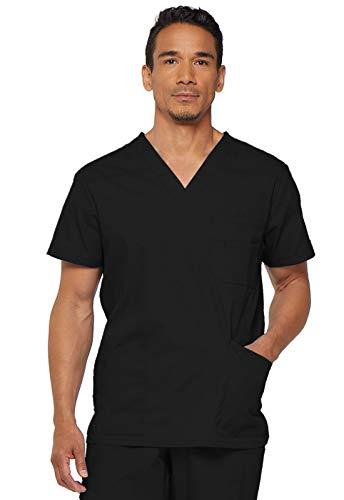
- The pocket count on the specific style. Not the brand, not the collection - the style number. Dickies’ own EDS Signature titles run from a three-pocket V-neck to a five-pocket shaped V-neck, and the difference is the whole garment in daily use.
- Whether the antimicrobial claim means what you think. It does not protect you or your patients. Cherokee says so in its own disclaimer; Jaanuu’s Silvadur treatment is an odor and garment-life claim too. Our page on what antimicrobial scrubs actually do goes through the wording.
Where to go next
For one-to-one rather than one-to-many, the site has FIGS vs Jaanuu for the premium head-to-head and Cherokee vs Dickies for the mid-market one. If you have not settled on a brand at all, the brand comparison is the upstream page, and the main scrubs roundup is where to start from scratch. Footwear has the same brand-premium argument, worked the same way, on the Dansko alternatives page.