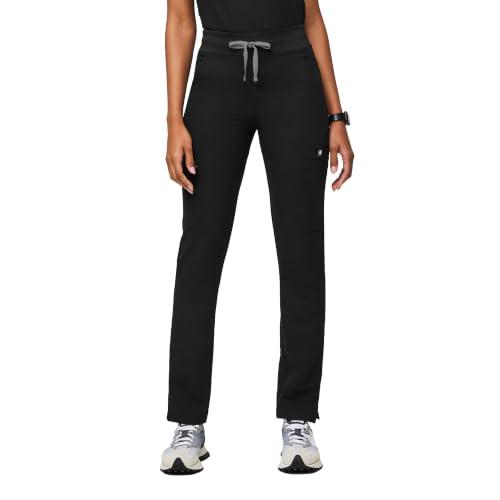
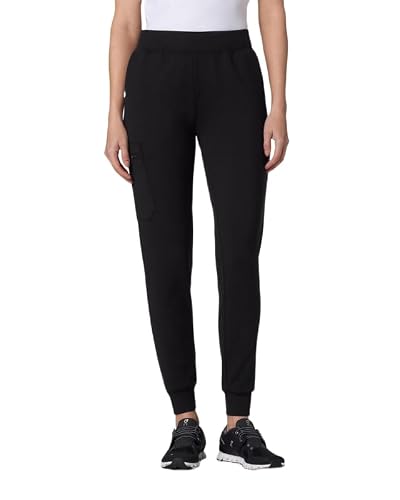
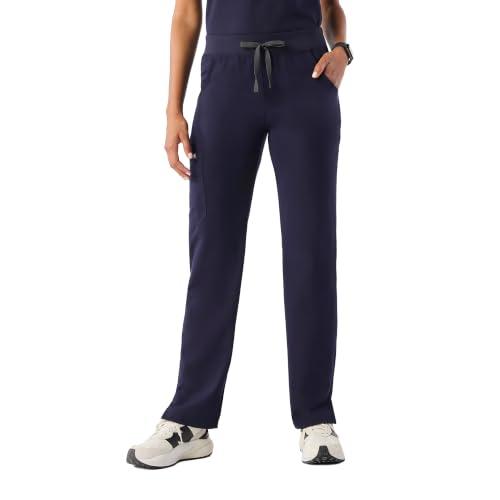
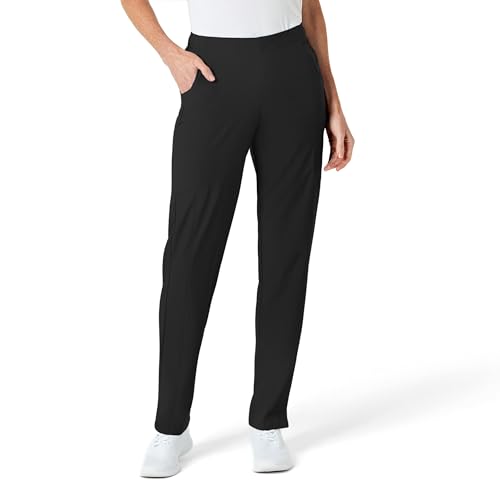
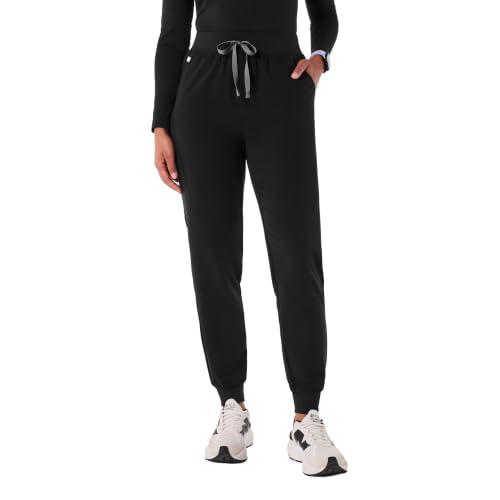
Straight to it. The FIGS Zamora high-rise jogger is the pick for most nurses - the high rise is the single feature that stops a pant becoming something you think about during a shift, and it is the only pant here with its full fabric composition published. It is for anyone who washes their own scrubs and is not fighting a slim cut. The budget pick is the WonderWink W123 flat-front cargo, which costs little enough to own five pairs - and five pairs is the actual answer to scrub laundry. If you wear compression socks, read the leg-opening section before you buy a slim leg.
The pant fails, not the top
A scrub top sits on your shoulders and mostly stays where you put it. A scrub pant gets squatted in to reach a floor-level pump, knelt in during a code, bent in forty times a shift and sat in on a plastic chair. That is why the three properties below decide a pant and why fabric adjectives do not:
- The waistband. A yoga waistband spreads pressure and disappears under a gown. A drawstring digs in and needs re-tying. A flat front looks smartest and has the least give of the three. There is no best answer, only the one that matches how your waistline behaves over twelve hours.
- The rise. A high rise stays up when you bend. A mid rise does not, reliably, and the gap between a top and a pant at the moment you are crouched by a bed is the complaint behind half the reviews in this category.
- The leg opening. Jogger cuff, straight slim, or cargo. This is the one that interacts with the rest of your kit, and almost nobody mentions it.
If you wear compression socks, the leg opening is the whole decision
This deserves its own section because it is the thing this site’s readers run into most and the thing scrub reviews mention least. A 20-30 mmHg knee-high is a firm, thick-cuffed garment that ends just below your knee. A slim-leg scrub pant is cut close through exactly that part of the calf.
Put them together and you get a pant you have to fight on and off twice a day, a cuff that rolls, and a sock that sits wrong - which matters, because a compression sock that has rolled is not doing its job. Our wide-calf compression page has the measuring method, and the practical rule for scrubs is simple: if you wear firm compression every shift, buy a jogger cuff or a straight cargo leg and skip the slim leg entirely. The jogger cuff sits above the sock rather than over it.
The same logic applies to anything else at ankle level. A tapered leg over a high-top work shoe is a daily annoyance, and our jogger scrubs page covers that format in full, including the units where a cuffed hem is the reason people choose it.
Pocket count is a strategy, not a spec
The spread on this page is eleven pockets to four, and the right number depends on a decision you may not have made consciously: does your gear live on your top, in your pants, or in a pouch?
Pants carry weight better than tops - a phone in a thigh pocket is less annoying than a phone in a chest pocket, and it does not swing when you lean over a bed. So if you are going to carry on your person, carrying low is usually the better call, and the eleven-pocket pant is a genuinely different working experience. If you use a pocket organizer or a pouch, four pockets is plenty and you are buying a silhouette instead. Our scrubs-with-pockets page counts the whole outfit together, and what nurses carry in their pockets is the inventory to count before you choose.
Rayon is a laundry decision, again
Same rule as the tops, and it rules out garments rather than ranking them. If your employer launders your scrubs centrally, a polyester-rayon-spandex blend will not come back the same shape - industrial temperatures are unkind to rayon, and the shape loss is permanent. That removes three of the five picks above from your shortlist before you compare anything else.
If you wash at home, cold wash and hang dry, the premium blends last and the drape is real. How to wash scrubs has the routine, and scrubs that don’t wrinkle is the page to read if coming out of a locker uncreased is what you are buying.
How these five were chosen
- Waistband, rise and leg opening scored first. They are what fails over twelve hours, and they are the properties nearly every competing page leaves out.
- Published figures only, and the gaps named. One pant here publishes its full fiber composition. The other four do not, and each entry says so rather than quietly presenting a fabric name as a specification.
- Currently buyable. Our price feed doubles as an availability check, and the table above reads it at request time and prints the date it was last checked.
- One pant per job. A high rise, a storage pant, a fade-resistant dark pant, a tailored cargo and a cheap one. No two are the same garment at a different price.
- No testing claimed. We have not worn these for a shift - how we pick is explicit about what the scores mean.
Which pant, by situation
You squat and bend constantly: high rise, every time. Nothing else on this page solves that.
You wear firm compression socks: jogger cuff or straight cargo. Not a slim leg.
Your employer launders your scrubs: the budget cargo, in five pairs.
You carry your whole kit on you: the eleven-pocket pant, and accept the calf fit.
Your waistline moves across a shift: a yoga waistband rather than a flat front - and if you are pregnant, our page for pregnant nurses covers the rest of the kit changes that come with it.
You wear black or navy and hate how it goes grey: the fade-resistance claim is the one on this page worth paying for.
Then match the top, which is a separate decision with separate failure modes - our scrub tops page ranks that field on fabric weight and pocket count, and how to choose scrubs walks the whole decision from the beginning if you are starting from scratch.