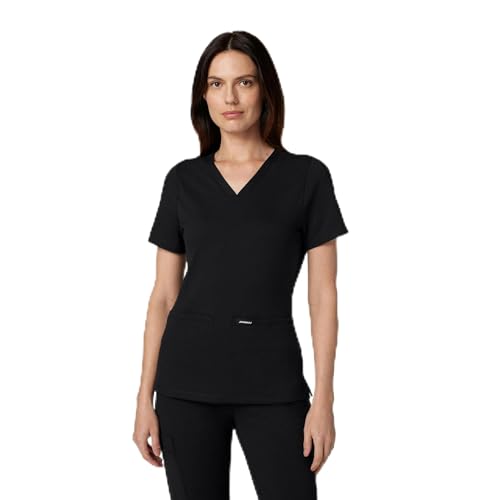
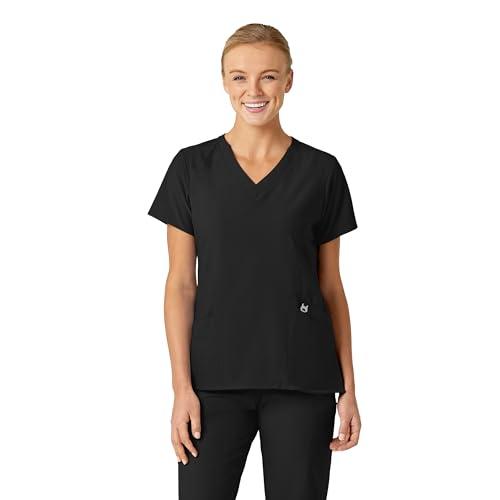
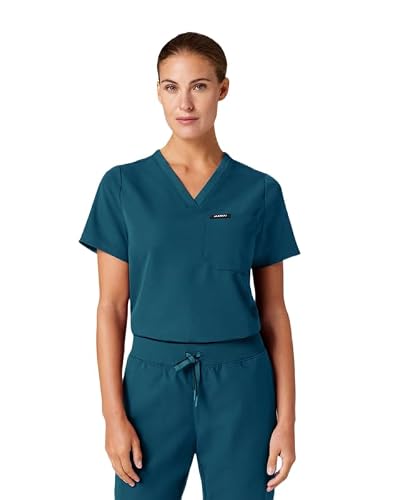
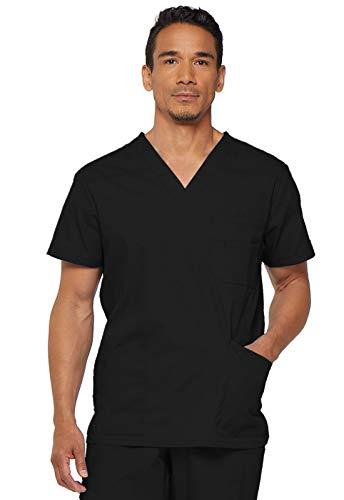
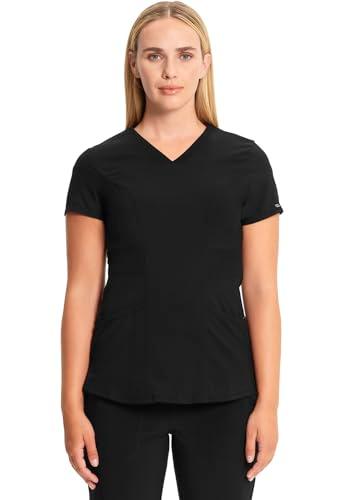
The verdict, before anything else. The Cherokee Infinity V-neck is the pick for most nurses - a 95/5 poly-spandex poplin with no rayon in it, which is the only reason a stretch top survives being washed hot every week, and it has the best-designed pockets on the page. It is for the nurse who launders scrubs constantly and wants the fabric to still be the same shape in a year. The budget pick is the Dickies EDS Signature V-neck, which has the most cotton, the widest size range on the site and the lowest price of anything here - buy five. If what you want is softness and you wash at home, skip both and read the Jaanuu Cesi entry.
Two numbers decide a scrub top. Almost nobody publishes either
Scrub tops are sold on adjectives - soft, buttery, breathable, second-skin. None of those is checkable. Two things are, and they predict almost everything you will think about a top after a month:
- Fabric weight, in oz/yd2. Two garments in this registry publish it: 6.0 and 9.7. That is a 60 percent difference and it decides two things you care about - how warm the top is and how much you can see through it. Heavier fabric is more opaque and warmer. Lighter is cooler and thinner. There is no version where you get both.
- Pocket count. The softest, best-tailored top on this page has one pocket. The cheapest-feeling has four plus hidden compartments. People buy on fabric and then discover the pocket count on their first shift, which is the single most common regret in this category.
Everything else - antimicrobial branding, four-way stretch, moisture wicking - is either present on nearly every garment here or means less than it sounds like. Our page on antimicrobial scrubs goes through what those treatments actually claim, which is garment odor and garment life, not protection for you or your patients. Cherokee says so in its own disclaimer.
The fiber question is really a laundry question
This is the decision that should come first, because it rules out whole garments rather than ranking them.
If your employer launders your scrubs centrally
Buy polyester, or poly-spandex with no rayon. Industrial laundry runs hotter than a domestic machine and it is unkind to rayon: the two highest-rayon garments on this page - one at 65 percent - will not come back the shape you sent them. That narrows your real shortlist to two of the five above, and it is not a close call.
If you wash your own
The whole field is open, and the premium rayon blends earn their price in hand-feel. Wash cold, hang dry, and they last. Our how to wash scrubs guide covers the routine that keeps a rayon blend alive, which is a different routine from the one that disinfects polyester.
If you run hot
Cotton content, or the lightest published fabric weight. 100% polyester is the worst thing to wear on a warm unit regardless of how much the listing talks about wicking, and a heavy rayon blend is not far behind. Best scrubs for hot flashes is built entirely around that constraint and is the better page if heat is your main problem.
How many pockets do you actually need?
Count what you carry before you buy, because the answer is usually either “one” or “four” and there is no sensible middle. If your badge, phone, shears, penlight and report sheet all live on your person, you need the storage top and the D-ring, and you will not care that the fabric is 100% polyester. If you work somewhere with a pouch or a pocket organizer, a one-pocket tailored top is genuinely nicer to wear and nothing is lost.
The in-between answer that works for a lot of people is a one- or two-pocket top plus a pocket organizer, which also means your gear moves between garments in one motion instead of five. The other half of that decision is our scrubs-with-pockets page, which counts pockets across tops and pants together.
Fit is a different page, on purpose
Nothing on this page is ranked on fit, because fit is not a property of a garment - it is a relationship between a garment and your body, and a top that is perfect on one person is a bad buy for the next. Where your shape is the binding constraint, start from a fit page and come back here for the fabric decision:
How these five were chosen
- Published figures first. Fabric composition, fabric weight where it exists, pocket count, size range and center back length. Every figure above is attributed in Sources, and where a brand does not publish one the entry says so instead of estimating.
- Laundry reality second. Rayon content was scored as a durability cost, not a softness benefit, because for a large share of nurses the laundry is not under their control.
- Currently buyable. Our price feed doubles as an availability check and the table above reads it at request time, printing the date it was last checked. One caveat is stated rather than hidden: several W123 colorways read as discontinued at retailers even while the line continues.
- One garment per job. No two picks here are the same top at a different price - they are a laundry-proof stretch top, a soft heavy top, a storage top, a light tailored top and a cheap cotton one.
- No testing claimed, and no awards. Nobody here has worn these for a shift. How we pick sets out exactly what the scores are: our editorial read of published specifications and aggregate owner feedback.
Buy a set, not a top
One top is a trial. Five is a system, and five cheap tops beat two expensive ones for the simple reason that laundry happens on a schedule you do not control. Work out your cost per shift rather than your cost per garment, and the budget pick above stops looking like a compromise.
Then match the pant, which is a genuinely separate decision - our scrub pants page ranks that field on waistband, rise and leg opening, and best scrub brands is the page to read if you would rather pick a house and stay in it. Scrubs under $30 is the price-led list if the budget is the whole question.