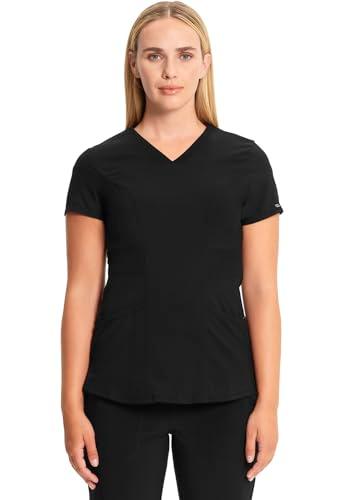
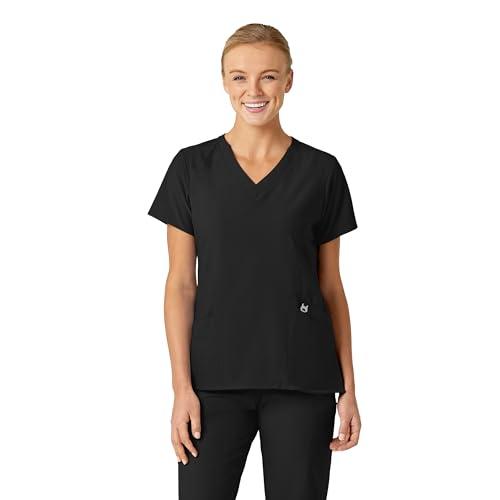
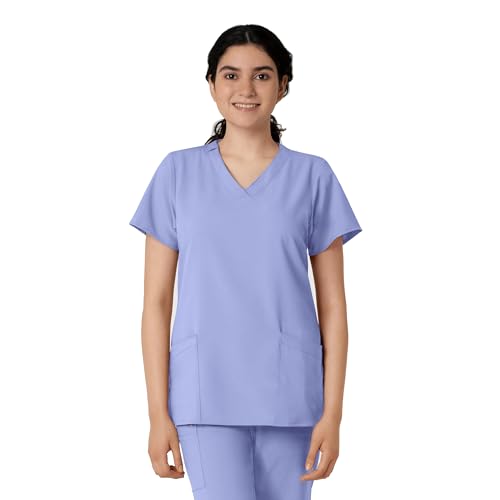
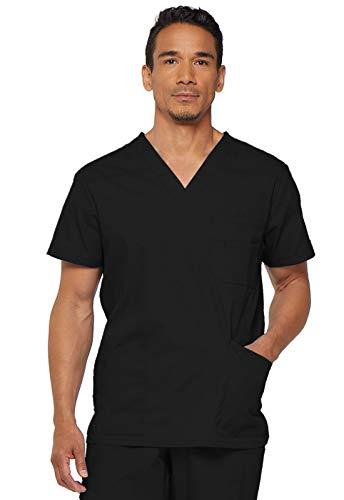
Most scrub advice is written as though you are buying one garment. You are not: you are buying a rotation, and the rotation is what determines whether you spend Sunday night doing laundry. That is the real case for cheap scrubs. Five garments you can wash hot and replace without flinching beat two you have to baby - and almost everything the premium tier charges for is hand-feel, branding and a cut, not durability. What the cheap tier genuinely withholds is specifications, and this page names each one.
Cost per wear, not cost
A twelve-hour shift generates one full change of clothing. Three shifts a week means three changes, and if you own two sets you are washing mid-week whether you planned to or not. Owning five tops is not indulgence - it is the thing that makes the laundry fit into one load on one day.
Run the arithmetic on garment life instead of sticker price and the cheap tier looks different again. A polyester top washed two hundred times and thrown out is not a worse purchase than a premium top washed two hundred times and kept, if the premium top cost three times as much and the thing that failed on both was the color. The honest exception is fit: a garment that fits badly is not cheap at any price, and this is the tier where fit is least predictable, because the fabric weight is unpublished and the opacity of a given color is a guess until it arrives.
The three things this tier does not publish
1. Fabric weight
Nobody here states oz/yd². That matters because fabric weight is what determines whether a light color is opaque under fluorescent lights, and it is the single most common reason a cheap scrub top gets retired after two shifts. The practical workaround is to buy dark the first time you try a brand, then decide.
2. An AAMI barrier level
WonderWink states AAMI Level Not Rated and non-fluid-resistant outright, and the others say nothing at all. If your role needs a fluid barrier - OR, procedural, anything where splash is routine - that is not something this bracket sells, and no amount of polyester makes a garment a barrier. How to choose scrubs covers which specifications are worth paying for by role.
3. Composition, in one case
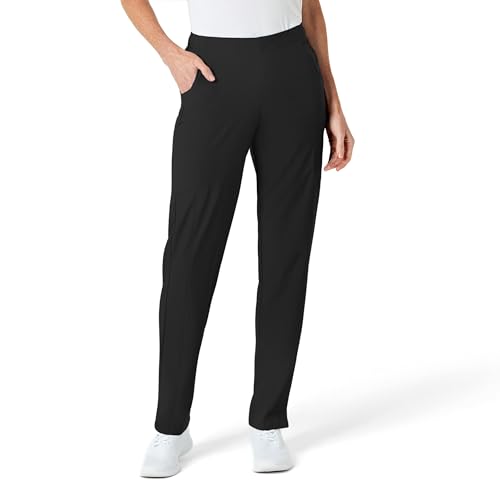
The one pant under the line does not publish what it is made of on any listing we could find. That is recorded in its entry rather than filled in with a plausible guess, and it is a real risk: you do not know how it will shrink, how it will breathe or how opaque it will be until the first wash.
How these five were chosen
- It priced under the line on a live feed. Each pick returned a live Amazon price below the thirty-dollar mark when this site’s daily price refresh ran on the morning this page went up. The number on each card is read live rather than written into this article, because scrub prices move by colorway and size.
- It is buyable right now, and that was re-checked. This matters more here than on most pages. A week before publication, the W123 line read as broadly unavailable away from Amazon - out of stock across sizes at Walmart, back-in-stock notifications on WonderWink’s own site, “no longer available” at a dental distributor. All three W123 garments returned live Amazon offers on the morning this page was written, so they stay - with the patchiness stated in their entries.
- It survives the laundry you actually do. Rayon-free compositions and mechanical stretch rank above spandex blends here, because elastane is the component that dies first and a cheap garment gets washed hot.
- Published specifications exist, or their absence is named. Pocket dimensions, size ranges, wash counts and center back lengths where brands publish them; a plain statement where they do not.
- Honest cons on every pick. Including the budget pick and the one ranked first - which, on this page, are the same garment.
Nobody here has worn any of these on a shift. How we pick sets out exactly what our scores are: a reading of published specifications and aggregate owner feedback, not a wear test.
Building a five-garment rotation under the line
The practical version of this page is a shopping list, not a ranking. Two Cherokee Infinity tops for the shifts where you want stretch and pockets, two Dickies EDS Signature tops for warm units and long shifts, and two or three W123 cargo pants to go under either - because the pant is the garment that limits you, and it is the only one under the line.
Buy one of each first. Scrub sizing is not consistent between brands and the contemporary fits run differently from the classic ones, so a five-garment order placed before you have tried a single item is how people end up with a drawer of near-misses. If your sizing is the problem rather than your budget, the EDS Signature range is the widest here and scrubs for curvy and plus-size nurses goes through the fit question properly.
What to spend more on instead
If you have a fixed budget for work clothes, the most useful thing this page can tell you is where the extra money is better spent. Not on a top. A premium top buys softness and a cut; a better pant buys a waistband that still works at hour eleven, and a better shoe under the hundred-dollar line buys something your knees notice. Scrubs are the category where cheap costs you least.
The one upgrade inside this hub worth the money is a jacket, because it gets worn over everything and lives longer than any top in the rotation - our scrub jacket roundup covers that, and the cheapest one sits just above this page’s line. Caps are the opposite: they are genuinely cheap, and the scrub cap picks both come in well under it.
Making cheap scrubs last
Three habits do most of the work. Wash cold and dry low, because heat is what kills a cheap polyester finish and a cotton blend shrinks on the second hot dry, not the first. Skip the fabric softener, which coats moisture-wicking fabric and turns a wicking top into a damp one. And wash work clothes separately from everything else, which is a contamination point rather than a laundry-advice cliche. The full version, including what to do with a contaminated garment, is in how to wash scrubs.
Who should not shop this tier
If your employer launders your scrubs industrially, cotton is the wrong fiber and the Dickies top comes off this list for you. If you need a fluid barrier, nothing here is rated and the bracket does not contain an answer. If you run hot, two of the five are 100% polyester and the honest recommendation is the breathability-first roundup instead. And if what you actually want is the hand-feel of a premium scrub, FIGS alternatives is the page that works through mid-market substitutes rather than the cheapest tier - the main scrubs roundup ranks the whole field with no price filter.