Skip to content
Shift & Sole

Buying guide · Shoes & Clogs

Best non-slip shoes for nurses

“Slip resistant” is a claim. A named ASTM or EN standard is a test. A coefficient is a measurement. Here is which of the three each shoe actually gives you.

By Selena H.
A freshly mopped hospital corridor with a wet floor

The shortlist

Quick picks

Tap any row to jump to that pick’s full write-up. The price column goes straight to Amazon.

Ranked comparison of our picks, with what each one is best for and our overall score
#ProductBest forScorePrice
1
HOKA Bondi SR product photo

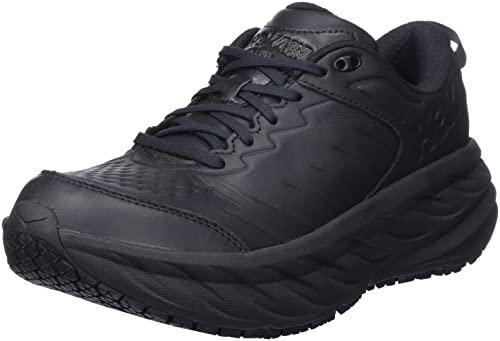
HOKA Bondi SR

The only shoe on this site with a lab-measured slip figure: 0.77 heel traction in RunRepeat's SATRA TM144 test against a 0.49 walking-shoe average.

Anyone who wants a measured traction number instead of a claim8.6/ 10
Check price on Amazon

No buyable offer at the last price check.

2
Crocs Neria Pro II LiteRide Work Clog product photo

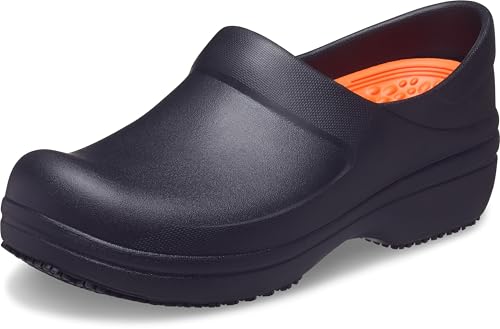
Crocs Neria Pro II LiteRide Work Clog

ASTM F2913-24 tested, ASTM F3445-24 and CE certified, EN ISO 20347:2012 OB SRC - the most specific compliance paperwork on the page, at the lowest price on it.

Our budget pick, and the cheapest shoe here that names its test standards8.4/ 10
$45.45 · View on Amazon

$64.99 · 30% off

3
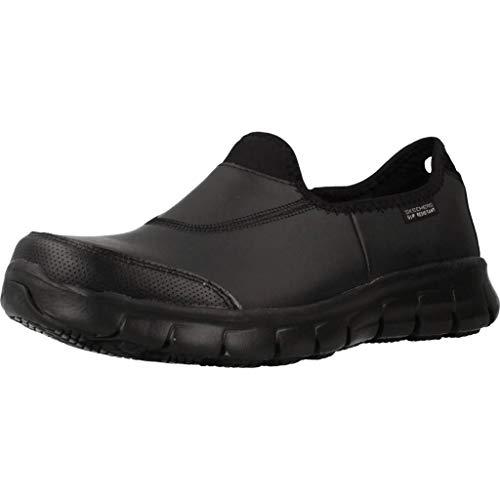
Skechers Work Sure Track Health Care Professional product photo

Skechers Work Sure Track Health Care Professional

SRC - the higher of the two EN slip ratings - on a wipe-down leather slip-on with a removable memory-foam insole.

A leather slip-on on a unit that accepts an EN rating7.8/ 10
4
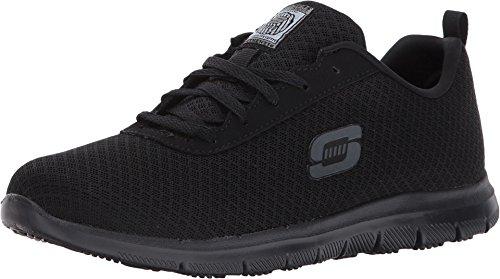
Skechers Work Ghenter-Bronaugh product photo

Skechers Work Ghenter-Bronaugh

ASTM F1677 Mark II slip testing and an EH rating to ASTM F2892-11, on a sneaker-shaped shoe at a work-shoe price.

The cheapest compliant lace-up with an ASTM number attached7.6/ 10
$64.99 · View on Amazon

$69.99 · 7% off

5
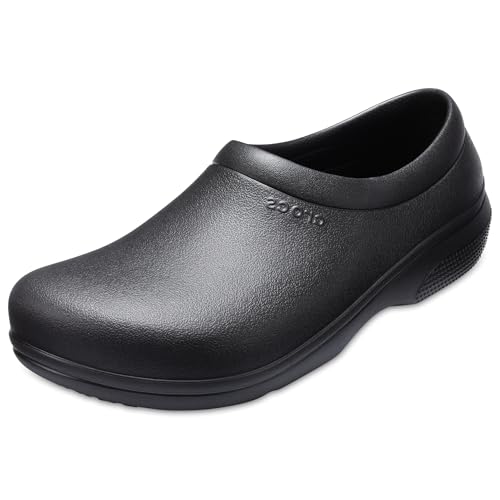
Crocs On The Clock Work Slip-On product photo

Crocs On The Clock Work Slip-On

Enclosed toe plus a Crocs Lock slip-resistant tread in waterproof Croslite, which makes a spill a wipe rather than a write-off.

A spare pair in the locker, or a unit where spills are constant7.3/ 10
$25.00 · View on Amazon

$44.99 · 44% off

6
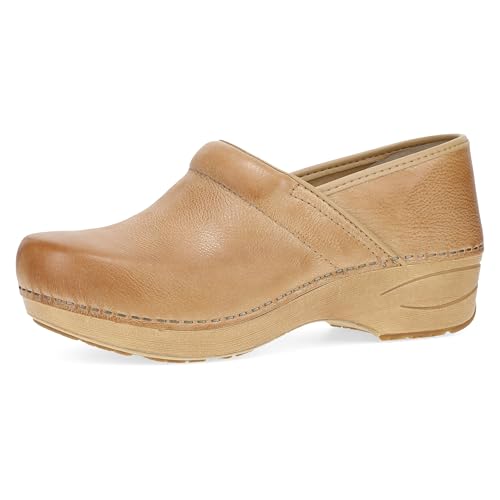
Dansko XP 2.0 Clog product photo

Dansko XP 2.0 Clog

The one leather clog in the registry whose product page states slip resistance for the model rather than leaving you to infer it.

A clog-dress-code unit that still wants stated slip resistance7.5/ 10

Scores are our own editorial assessment of how well each product suits the job on this page. They are not a product rating from reviews and not the result of testing - we have not worn or used these. Prices come from Amazon and were last checked November 28, 2026; a button with no number means Amazon showed no live price at that check, so tap it for the current one. #ad

If you read one thing on this page, read this. The HOKA Bondi SR is the pick for anyone who wants evidence instead of a sticker - it is the only shoe on this site with a lab-measured traction figure, 0.77 heel traction under SATRA TM144 against a 0.49 walking-shoe average, and it is for the nurse on a wet-floor unit who can live with 14 oz of unventilated leather. The budget pick is the Crocs Neria Pro II LiteRide Work Clog, which costs the least of anything here and still names more test standards than anything else on the page. If your feet run hot, skip the Bondi SR entirely and start at pick three.

Three different things get called “non-slip”

This is the whole page in one idea, and it is the reason the ranking above is not just sorted by price. Shoes sold as non-slip fall into three groups, and the gap between them is enormous:

  • A claim. The listing says “slip resistant” and names nothing. No standard, no version, no figure. This is the most common case in the category and it is worth almost nothing to you in a compliance conversation.
  • A named standard. The listing cites ASTM F2913, ASTM F1677 or EN ISO 20347 SRC. Somebody tested something to a written method. This is what most of the picks above give you, and it is usually enough for an employer’s footwear policy.
  • A measurement. An actual coefficient from a named test, with a published comparison. Exactly one shoe in this registry has that, and it is why it sits at number one.

Nobody on this site has walked any of these across a wet floor. How we pick is explicit about that: the scores are our reading of published standards, manufacturer pages and aggregate owner feedback, not a wear test. The difference between this page and most of its competitors is not that we tested - it is that we sorted by who can prove what.

Read your employer’s policy before you read any review

The single most expensive mistake in this category is buying a well-reviewed slip-resistant shoe that cites the wrong standard. ASTM and EN are different systems, and a policy written around one does not automatically accept the other. Two of the picks above are affected:

  • The Skechers Sure Track listings we located cite EN ISO 20347:2012 SRC, not an ASTM figure.
  • The Crocs work clogs cite ASTM F2913 but in different versions across listings - F2913-24 on some, F2913-11 on others.

So the order of operations is: find the sentence in your policy, note the standard it names, then buy against that sentence. If your policy says nothing at all - which is common on non-clinical floors - you have the full field, and you should be optimizing for cushioning and weight instead. The 12-hour shift roundup is the right page for that, and how to choose nursing shoes walks the whole decision from the start.

What traction costs you everywhere else

A slip-resistant outsole is not free, and the bill arrives in three places.

Weight

Grippy rubber is dense rubber, and full-coverage outsoles are thick. The Bondi SR’s outsole is 5.9 mm, and the shoe lands around 14 oz in a men’s 9 - the heaviest shoe in this registry. Over twelve hours and ten thousand steps that is work your hip flexors are doing instead of your floor.

Breathability

The uppers that wipe clean are the uppers that do not breathe. Unperforated leather is waterproof and hot at the same time, by design - there is no version of this trade-off where you get both. If your feet sweat, the honest answer is a washable foam clog with a removable liner, not a leather work shoe, and our waterproof shoes page goes through the same tension in more detail.

Stiffness

RunRepeat measured 27.4 N to bend the Bondi SR 30 degrees - roughly twice the average for the shoes it tests. There is no break-in that fixes that, because the stiffness is the outsole. If you want a slip-resistant shoe that flexes, you want the Skechers lace-up, and you accept thinner cushioning in return.

The insole conversation nobody has

Four of the six picks above ship with a removable footbed, and on three of them the stock footbed is the weakest part of the shoe. Memory foam is comfortable on day one and flattened by month three. That is not a defect, it is what memory foam does.

So the realistic budget for a cheap compliant shoe is the shoe plus an insole, and the realistic question is whether the shoe will accept one - which is why “removable footbed” is scored on this page at all. The Crocs LiteRide liner, the Sure Track memory-foam insole and the Dansko XP 2.0 footbed all come out cleanly. Our insoles page covers what to put back in, and the flat-feet roundup is the one to read if the arch is the actual problem.

How we ranked these six

  1. Evidence first. A measured coefficient beats a named standard, which beats a bare claim. That ordering alone moved two shoes up and one down.
  2. It has to be currently buyable. Our price feed doubles as an availability check - a registry product with no live offer gets no price - and nothing on this page was dead at our most recent refresh. The table above reads that feed at request time and prints the date it was last checked.
  3. It has to survive the thing that caused the slip. If the floor is wet because something was spilled, the upper matters as much as the outsole. Mesh is out.
  4. Honest cons on every pick, including the winner. The number-one shoe here is the heaviest and least breathable shoe on the site, and that is in its entry rather than in a footnote.
  5. No invented tests and no awards. Where a figure exists, it is cited and attributed. Where one does not, the entry says the standard is a claim.

Pick by what your floor actually does

Wet-mopped corridors, constantly: the measured figure is worth the weight. Bondi SR, and plan for hot feet.

Spills and fluids rather than water: cleanability outranks traction, because the shoe you cannot decontaminate gets thrown away. Foam work clog with a washable liner.

A policy that names ASTM: the Skechers lace-up is the cheapest compliant answer, with an insole on top.

A code team or a running unit: no open-back clog, whatever its outsole is rated to. A laced shoe with real heel retention - the ER roundup is organized entirely around that constraint, and clogs vs sneakers is the argument in full.

Standing in one place on concrete: traction is not your problem, cushioning is. Best shoes for standing all day is the page you want instead of this one.

Two checks before you order

  1. Match the standard, not the adjective. Screenshot the line in your policy and compare it to the listing’s spec block. “Slip resistant” in a product title is not a standard.
  2. Decide the insole question up front. If the stock footbed does not come out, the shoe is as comfortable as it will ever be on the day it arrives.

The picks in full

Every pick, in order

01

Anyone who wants a measured traction number instead of a claim

HOKA Bondi SR

The only shoe on this site with a lab-measured slip figure: 0.77 heel traction in RunRepeat's SATRA TM144 test against a 0.49 walking-shoe average.

HOKA Bondi SR product photo

Slip-resistant leather work shoe

Stack (listed)
42 mm heel / 36 mm forefoot men's; REI lists 41 mm / 35 mm women's
Stack (lab measured)
39.4 mm / 31.2 mm (RunRepeat calipers)
Drop
6 mm listed; 8.2 mm measured by RunRepeat
Weight
About 14 oz men's / 11.5 oz women's - the heaviest shoe on this site
Upper
Water-resistant genuine leather with no ventilation perforations
Outsole
Slip-resistant rubber, full coverage, 5.9 mm thick
Slip resistance (tested)
0.77 heel traction in RunRepeat's SATRA TM144 test, against a 0.49 walking-shoe average
APMA
Seal of Acceptance

Specs: RunRepeat - HOKA Bondi SR lab review and SATRA traction test

Every other shoe in this category asks you to accept a sticker. This one has a number from somebody with calipers and a test rig: 0.77 heel traction under SATRA TM144, where the walking-shoe average RunRepeat publishes is 0.49. It also carries the APMA Seal of Acceptance, a 5.9 mm full-coverage slip-resistant outsole and a water-resistant leather upper with no perforations, which is what makes it the one HOKA that survives a spill rather than absorbing it. Two honest costs, both large. It weighs about 14 oz in a men's 9 - the heaviest shoe on this site, and twelve hours of that is a real tax on your hips. And unperforated leather is waterproof and hot in the same breath, so if your feet run warm this is the wrong shoe no matter how good the traction is. RunRepeat also scored the heel padding 1 out of 5 for durability, and the listed and measured stack figures disagree by 3 to 5 mm.

Proven traction9.8
Cushioning9.2
Wipe-clean upper9.4
Breathability2.0
Weight3.0
Overall8.6 / 10

What it gets right

  • The only HOKA built for a wet floor rather than a road: lab-tested heel traction of 0.77 against a 0.49 walking-shoe average
  • Leather upper wipes clean, which no mesh running shoe can do - this is the HOKA that survives a spill
  • Bondi-family cushioning in a shoe a slip-resistance policy will actually accept
  • APMA Seal of Acceptance, and wide builds exist in both men's and women's

What it gets wrong

  • About 14 oz in a men's 9 - heavier than every other shoe on this site, and twelve hours of that is real
  • Zero ventilation by design: unperforated leather is waterproof and hot in the same breath
  • RunRepeat's Dremel test scored the heel padding 1 out of 5 for durability, and measured outsole wear of 2.5 mm against a 1.3 mm average
  • Very stiff - 27.4 N to bend it 30 degrees, roughly twice the average - so there is no flex to break in
  • Listed and measured stack disagree by 3-5 mm, and the measured drop is 8.2 mm rather than the stated 6 mm

Who should skip itYour unit has no slip-resistance requirement and your feet run hot. You would be carrying 14 oz of unventilated leather to solve a problem you do not have - the Clifton 10 is five ounces lighter and breathes.

Check price on Amazon

No buyable offer at the last price check.

#ad How we earn · we never print a price we cannot verify

02

Our budget pick, and the cheapest shoe here that names its test standards

Crocs Neria Pro II LiteRide Work Clog

ASTM F2913-24 tested, ASTM F3445-24 and CE certified, EN ISO 20347:2012 OB SRC - the most specific compliance paperwork on the page, at the lowest price on it.

Crocs Neria Pro II LiteRide Work Clog product photo

Enclosed-toe work clog, cushioned insole

Style
207231
Footbed
LiteRide foam with removable, washable footbed liners
Outsole
Crocs Lock slip-resistant tread
Toe
Enclosed toe and heel
Certification
ASTM F2913-24 tested, ASTM F3445-24 and CE certified; meets or exceeds EN ISO 20347:2012 OB SRC

Specs: Crocs - Women's Neria Pro II LiteRide Work Clog product page (style 207231)

This is the cheapest pick on the page and it has the longest list of named standards on it, which is an unusual combination and the reason it ranks second rather than last. Crocs publishes the actual test versions - F2913-24 rather than a vague “ASTM tested” - so when your educator asks what your shoes are certified to, you have an answer. The removable, washable LiteRide footbed liner fixes the plain Croslite work clog's worst habit: the part that soaks up sweat is now the part you can clean, and taking it out leaves room for a real orthotic. The limits are structural, not a surprise. It is a foam shell with minimal arch support, softer is not the same as supportive, and the liner is a consumable that compresses. Crocs recommends sizing up, so your usual size is a returns trip.

Standards named9.6
Value9.6
Cleanability9.4
Arch support3.4
Lifespan4.2
Overall8.4 / 10

What it gets right

  • The removable, washable footbed liner is the fix for the plain Croslite work clog's biggest weakness
  • Removable means you can swap in a real orthotic, which a moulded Croslite footbed will not take well
  • Washable liner, so the thing that absorbs sweat is the thing you can clean
  • Slip resistance is certified and the standards are named, which most work clogs do not do

What it gets wrong

  • More money than the plain Neria Pro II for a difference you only feel if the standard footbed was failing you
  • LiteRide foam still compresses over time - a removable liner is a consumable
  • Same minimal structure: softer is not the same as supportive
  • Crocs recommends sizing up, so ordering your usual size is a returns trip

Who should skip itYou already use a custom orthotic you are happy with. You would be paying for a premium footbed liner you are about to take out and throw in a drawer.

$45.45 · View on Amazon

$64.99 · 30% off

#ad How we earn · price as of November 28, 2026

03

A leather slip-on on a unit that accepts an EN rating

Skechers Work Sure Track Health Care Professional

SRC - the higher of the two EN slip ratings - on a wipe-down leather slip-on with a removable memory-foam insole.

Skechers Work Sure Track Health Care Professional product photo

Slip-resistant slip-on work shoe

Slip resistance
EN ISO 20347:2012 SRC outsole on the listings located
Upper
Smooth leather
Insole
Removable memory-foam cushioned insole
Lining
Soft fabric
ASTM
The listings found cite the EN standard, not an ASTM figure

Specs: Skechers Work Relaxed Fit Sure Track retailer listing

The slip-on format is the one most nurses actually want: no laces to re-tie after a code, no laces to drag through whatever is on the floor. The outsole on the listings we located is rated EN ISO 20347:2012 SRC, which is the higher of the two EN ratings, and the smooth leather upper wipes down properly rather than wicking. The removable memory-foam insole means an orthotic goes in without a fight, and the relaxed fit runs genuinely roomier - useful if your feet swell through hour nine. One caveat decides whether you can buy it: the listings cite the EN standard and not an ASTM figure, so if your employer's footwear policy names an ASTM number, verify the exact SKU before you commit. The Sure Track name also covers both lace-up and slip-on SKUs and the listing does not always say which closure you are getting.

Standards named7.4
Orthotic friendly9.0
Cleanability8.8
Cushioning5.6
Value8.6
Overall7.8 / 10

What it gets right

  • The memory-foam insole is removable, so an orthotic goes in without fighting the shoe
  • Smooth leather upper wipes down properly
  • Relaxed fit runs genuinely roomier, useful if your feet swell through the shift
  • SRC is the higher of the two EN slip ratings

What it gets wrong

  • The listings located give an EN rating rather than an ASTM figure - if your employer specifies ASTM, verify the SKU first
  • The Sure Track name covers lace-up and slip-on SKUs, and the Amazon listing does not state which closure you are getting
  • Same memory-foam lifespan problem as the rest of the Skechers work range

Who should skip itYour employer's footwear policy names an ASTM standard. The listings for this model cite EN ISO 20347 instead, and that is a compliance argument you do not want at the cheap end of the work-shoe market.

$72.10 · View on Amazon

#ad How we earn · price as of November 28, 2026

04

The cheapest compliant lace-up with an ASTM number attached

Skechers Work Ghenter-Bronaugh

ASTM F1677 Mark II slip testing and an EH rating to ASTM F2892-11, on a sneaker-shaped shoe at a work-shoe price.

Skechers Work Ghenter-Bronaugh product photo

Slip-resistant work sneaker

Slip resistance
Sole tested to ASTM F1677-2005 Mark II
Electrical hazard
EH rated to ASTM F2892-11
Coefficient
Listings state it meets or exceeds 0.5 on wet and oily surfaces
Insole
Skechers Memory Foam

Specs: Vet-Direct - Skechers Ghenter Bronaugh listing with ASTM figures

If your policy says ASTM, this is the cheapest way to satisfy it in a lace-up: the sole is tested to ASTM F1677-2005 Mark II, it is EH rated to ASTM F2892-11, and the listings state it meets or exceeds a 0.5 coefficient on wet and oily surfaces. It looks like a sneaker rather than a work shoe, which matters on a unit where clogs read as uniform. Two things to plan for. The memory-foam insole is wonderful on day one and flattened by month three, so budget for an aftermarket insole on top rather than treating this as a cushioned shoe. And Skechers cites different ASTM standards across its work range - F2892, F2413 and F1677 all appear - so check the specific SKU against your employer's list rather than the brand.

Standards named8.4
Value9.2
Heel hold8.6
Cushioning4.4
Insole lifespan3.6
Overall7.6 / 10

What it gets right

  • Rated slip resistance with an actual test standard and coefficient attached - most sneakers in this price band have neither
  • Sneaker shape with work credentials, so it clears a dress code without feeling like a clog
  • The cheapest route to a compliant lace-up by a long way
  • Widely available in wide sizes

What it gets wrong

  • Memory-foam insole is comfortable on day one and flattened by month three
  • Cushioning is nowhere near the running-shoe options
  • Listings cite different ASTM standards across Skechers work models (F2892, F2413, F1677), so check the specific SKU against your employer's list
  • Manufacturer spec sheets are hard to find; most figures come from retailers

Who should skip itYou need serious cushioning for a concrete-floor unit. This is a compliance shoe with a comfort insole, not a cushioned shoe - budget for an aftermarket insole on top.

$64.99 · View on Amazon

$69.99 · 7% off

#ad How we earn · price as of November 28, 2026

05

A spare pair in the locker, or a unit where spills are constant

Crocs On The Clock Work Slip-On

Enclosed toe plus a Crocs Lock slip-resistant tread in waterproof Croslite, which makes a spill a wipe rather than a write-off.

Crocs On The Clock Work Slip-On product photo

Enclosed-toe work clog

Material
Croslite, waterproof and washable
Outsole
Crocs Lock slip-resistant tread
Certifications
ASTM F2913 and EN ISO 20347:2012 OB cited on listings (test version varies)
Toe
Fully enclosed

Specs: Crocs - On The Clock Work Slip-On product page

The reason this is on a slip-resistance page and the classic Croc clog is not: an enclosed toe and a Crocs Lock tread, which are the two things a vented beach clog does not give you and the two things an infection-control policy actually checks. Waterproof Croslite means contamination is a thirty-second problem at a sink, and the shoe weighs almost nothing, which your hips notice at hour ten. Where it falls down is honest and important: this is a flat foam shell with minimal arch support, and the registry entry says plainly to skip it if you have plantar fasciitis or fallen arches, because a structureless bed is the specific thing that makes those worse over twelve hours. Listings also cite different ASTM test versions - F2913-24 on some, F2913-11 on others - so confirm which one your employer requires.

Cleanability9.8
Weight9.6
Value9.0
Standards named6.0
Arch support2.6
Overall7.3 / 10

What it gets right

  • Enclosed toe plus a slip-resistant outsole: the two things a classic Croc clog does not give you
  • Waterproof Croslite means a spill is a wipe, not a write-off
  • Cheapest route to a hospital-compliant shoe by a wide margin
  • Weighs almost nothing, which your hips notice on a long shift

What it gets wrong

  • Minimal arch support - this is a foam shell, not a supportive shoe
  • Listings cite different ASTM test versions (F2913-24 vs F2913-11), so confirm what your employer requires
  • Foam compresses and the shoe has a shorter useful life than leather
  • Sizing reports conflict: most reviewers say size down, some say true to size

Who should skip itYou have plantar fasciitis or fallen arches. A flat foam bed with no structure is the specific thing that makes those conditions worse over twelve hours.

$25.00 · View on Amazon

$44.99 · 44% off

#ad How we earn · price as of November 28, 2026

06

A clog-dress-code unit that still wants stated slip resistance

Dansko XP 2.0 Clog

The one leather clog in the registry whose product page states slip resistance for the model rather than leaving you to infer it.

Dansko XP 2.0 Clog product photo

Leather nursing clog, slip resistant

Heel height
1.7 in
Footbed
Dual-density PU with memory foam, removable
Arch
Dansko Natural Arch
APMA
Accepted
Slip resistance
Stated slip resistant

Specs: Dansko - XP 2.0 Black Waterproof Pull Up product page

Most leather nursing clogs say nothing about slip resistance at all - the standard Dansko Professional's product page does not state it. The XP 2.0 does, for this model, which is the only reason a clog belongs on an evidence-ranked traction page. You also get the removable dual-density footbed, so your own orthotic drops straight in, a lower 1.7 in heel than the Professional that is easier on the forefoot, APMA acceptance, and waterproof versions for anyone who gets fluid on their shoes. The structural problem is the format: it is still an open-back clog with no heel retention, which is the wrong shoe for a code team or anything faster than a brisk walk no matter what the outsole is rated to. It also costs more than the standard Professional, and the advantage only pays off if you use the removable footbed.

Standards named6.8
Orthotic friendly9.4
All-day support9.0
Heel retention3.2
Value5.0
Overall7.5 / 10

What it gets right

  • The removable footbed is the difference that matters: you can pull it and drop in your own orthotic
  • Lower heel than the standard Professional, which is easier on the forefoot
  • Slip resistance is stated for this model, not inferred
  • Waterproof versions exist, which is the right answer for anyone who gets fluid on their shoes

What it gets wrong

  • Costs more than the standard Professional
  • Still an open-back clog with the heel-retention problem that comes with it
  • Narrower feel than the Professional in several colorways per aggregate owner reports

Who should skip itYou want the cheapest route into a Dansko. The standard Professional is less money and the XP 2.0's advantages - removable footbed, stated slip resistance - only pay off if you will actually use them.

$164.95 · View on Amazon

#ad How we earn · price as of November 28, 2026

FAQ

Questions people actually ask

What makes a nursing shoe genuinely non-slip?

A tested outsole, named by standard. The ones you will see are ASTM F2913 and ASTM F1677 in the US and EN ISO 20347 SRC in Europe, and the useful listings say which version they were tested to. A product title that says “slip resistant” with no standard attached is a marketing line, not a test result - and only one shoe in this registry goes further and publishes an actual measured coefficient.

Are Crocs allowed as non-slip hospital shoes?

The work models usually are; the vented classic clog usually is not. The difference is the enclosed toe and the Crocs Lock slip-resistant tread, which the work range has and the beach clog does not. Confirm the ASTM version on the specific listing, because F2913-24 and F2913-11 both appear across Crocs work SKUs. Are Crocs good for nurses covers the support question separately, which is the one that actually disqualifies them for some feet.

Which non-slip nursing shoe has the best cushioning?

The HOKA Bondi SR, by a wide margin - it is Bondi-family cushioning in a shoe a slip-resistance policy will accept. The cost is weight and heat: about 14 oz and an unperforated leather upper. If your policy does not actually require a rated outsole, a cushioned running shoe will be lighter, cooler and better padded, which is what our HOKA page works through.

Do slip-resistant soles wear out?

Yes, and faster than the rest of the shoe in at least one case: RunRepeat measured 2.5 mm of outsole wear on the Bondi SR against a 1.3 mm average in its Dremel test. Tread that has gone smooth is not slip resistant regardless of what it was certified to on day one. How often to replace nursing shoes has the mileage framing.

Is a clog ever the right non-slip shoe?

Only if your unit’s dress code points you there, and then only a model that states slip resistance for itself - the Dansko XP 2.0 does, the standard Professional’s product page does not. Even then, an open-back clog has no heel retention, so it is the wrong shoe for a code team no matter how good the outsole is.

What is the cheapest shoe that will pass a footwear policy?

Among these six, the Crocs Neria Pro II LiteRide work clog - it is the lowest-priced pick on the page and it names more standards than anything else on it. If your policy specifically requires a lace-up, the Skechers Ghenter-Bronaugh is the cheapest route to an ASTM figure. Both need an insole budgeted on top if you are on concrete. Nursing shoes under $100 is the wider price-led list.

How this page was put together

We start from the problem the gear has to solve over twelve hours, shortlist products that are currently sold, compare the manufacturers’ published specifications against what that problem actually needs, and read owner feedback at volume to find the failure modes worth reporting. We have not worn, used or physically tested any of this. Where a figure comes from a manufacturer we name them; where published figures disagree with each other we say so rather than picking the flattering one; where nobody publishes a figure we say that too. Prices are never typed into the page: they come from Amazon’s API with the date they were checked, and they expire on their own. Read the full method.