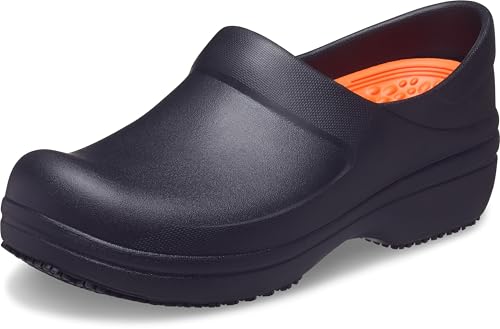
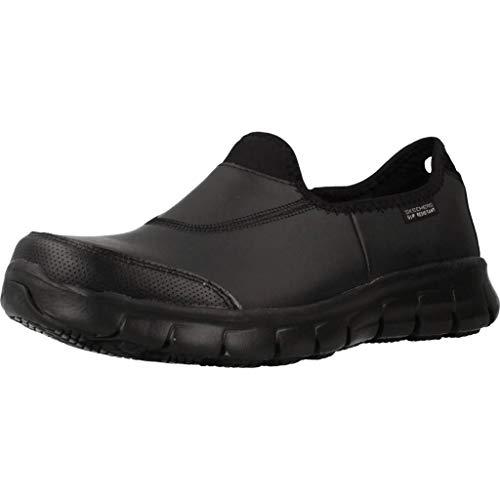
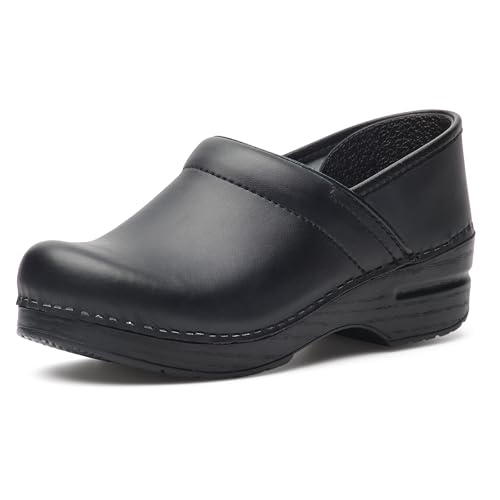
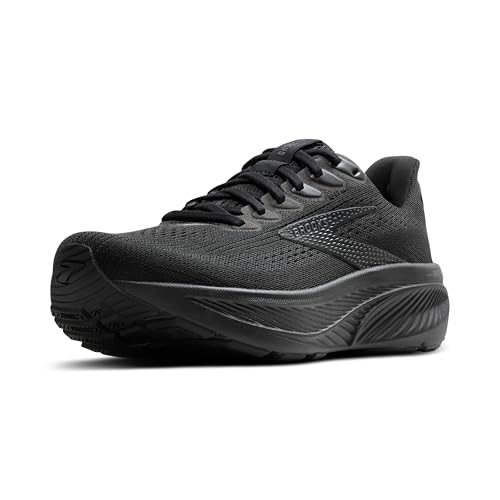
Here is the answer first. For most healthcare workers with an open dress code, the Brooks Ghost 17 is the pick - 36.5 mm of cushioning at 10.1 oz, in the shoe you are most likely to find in your size locally - and it is for anyone whose shift is mostly walking and who does not get fluid on their feet. The budget pick is the Crocs Neria Pro II LiteRide work clog, which is also the right answer regardless of price if your shoes get contaminated, because it is washable and its test standards are printed by version. If your department enforces a slip-resistance policy, start at the Skechers slip-on and read the standards section below before you order anything.
Why this page is organized by job
Almost every footwear roundup in this category is written for a med-surg nurse: twelve hours, ten thousand steps, one floor. That is a real job, and our main nursing shoes roundup is built for it. But a hospital runs on a lot of other people, and their constraints are genuinely different:
- An OR tech or sterile processing needs a shoe that survives decontamination. Mesh is disqualified before comfort is even discussed.
- A phlebotomist walks constantly between units with a tray, and cares about weight more than cushioning depth.
- A radiology or pharmacy tech stands in one place for hours. Traction is not the issue; the midsole and the width are.
- EVS and food service have the most strictly enforced footwear policies in the building and the least likelihood of a stipend to meet them.
- Transport, security and code-response roles actually run. That rules out every open-back clog on the site, whatever its outsole is rated to.
- A CNA or medical assistant sits between all of the above - we have a dedicated page for that role, because the lifting and repositioning load changes the answer again.
Start with the policy, then the hazard, then the comfort
In that order, because the first two can disqualify a shoe and the third cannot.
1. Does your department require a rated outsole?
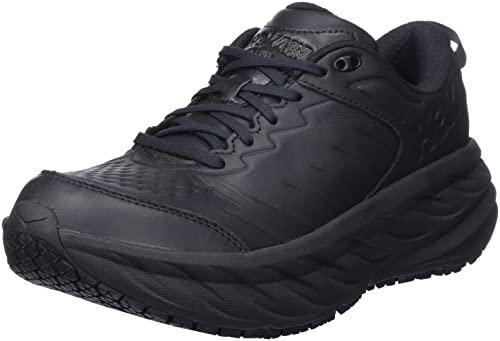
If yes, find the sentence and note the standard it names. ASTM F2913 and ASTM F1677 are the US methods; EN ISO 20347 SRC is the European one. They are not interchangeable in a policy conversation. Only three picks above are rated at all, and one of them cites EN rather than ASTM. Our non-slip page ranks the rated field specifically by how well each shoe can prove it.
2. Will the shoe get contaminated?
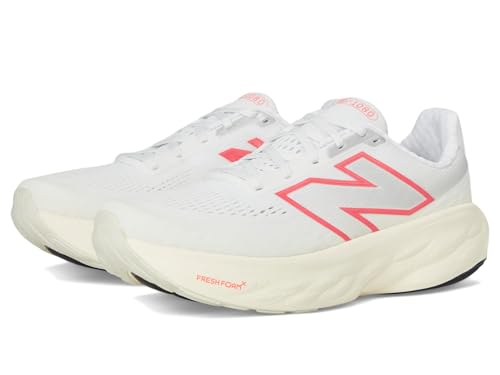
If fluid lands on your feet with any regularity, you need a wipeable or washable upper, full stop. That is a two-material field: leather and foam. A mesh running shoe absorbs what lands on it and cannot be properly cleaned, which turns a comfort purchase into a monthly one.
3. Then optimize comfort for your actual movement pattern
Walking all shift and standing all shift are different problems. Walking rewards low weight and a smooth transition; standing rewards midsole volume and a footbed that does not bottom out. Best shoes for standing all day is built around the standing case, and best walking shoes around the other.
Fit beats every spec on this page
Width is the most common failure and the least discussed. Feet swell over a twelve-hour shift, and a shoe that fits at 07:00 can be the reason your toes hurt at 17:00. Only one pick above is confirmed at retail in multiple widths; the rest are a single width and a size-up gamble.
Two practical rules. Buy in the afternoon, when your feet are already swollen. And if you have a known shape issue, start from a fit page rather than a comfort page - wide feet, high arches and bunions each change the shortlist more than any midsole difference does.
Gendered sizing, and why some entries quote two weights
Most of these models exist in both a men’s and a women’s last, and the stack and weight figures above are listed per the source that published them - which is why some entries quote two weights. If you are between the two lasts, our men’s and women’s pages carry the fit notes that are specific to each.
How these six were chosen
- Role coverage, not a ranked best-to-worst. The order above is our overall read, but the right pick for you is the one whose role note matches your job.
- Disqualifiers first. Rated outsole and cleanability were treated as pass/fail before comfort was scored, because that is how a dress code works.
- Currently buyable. Our price feed doubles as an availability check - products with no live offer are excluded by name - and every pick here returned an offer at the most recent refresh. The table reads that feed at request time and prints the date it was checked.
- Published figures only. Stack, drop, weight, widths and standards are each attributed in Sources. Where a figure is retailer-sourced rather than from the manufacturer, the entry says so.
- No testing claimed. We have not worn these - how we pick is explicit about what the scores are.
Budget order of operations
If money is the binding constraint, spend it in this order. First, a shoe that satisfies your dress code - a non-compliant shoe is a zero, however comfortable. Second, an insole, because a cheap compliant shoe plus a structured footbed outperforms a mid-priced shoe with a flattened memory-foam bed: our insoles page covers what to put in. Third, and only third, more shoe. Nursing shoes under $100 is the price-led list, and compression socks are the cheapest thing on this whole site that changes how your legs feel at hour ten.